INVESTMENT MARKET UPDATE
FEBRUARY 2025
What developments have unfolded in local and global markets throughout the month of FEBRUARY?
 3.2% YoY
SA headline inflation in January
 R17.25 Billion YoY
Diesel savings were achieved with the suspension of loadshedding
 25%
25%
Tariff on all Mexican & Canadian goods imports takes effect
GLOBAL MARKET
_______________________
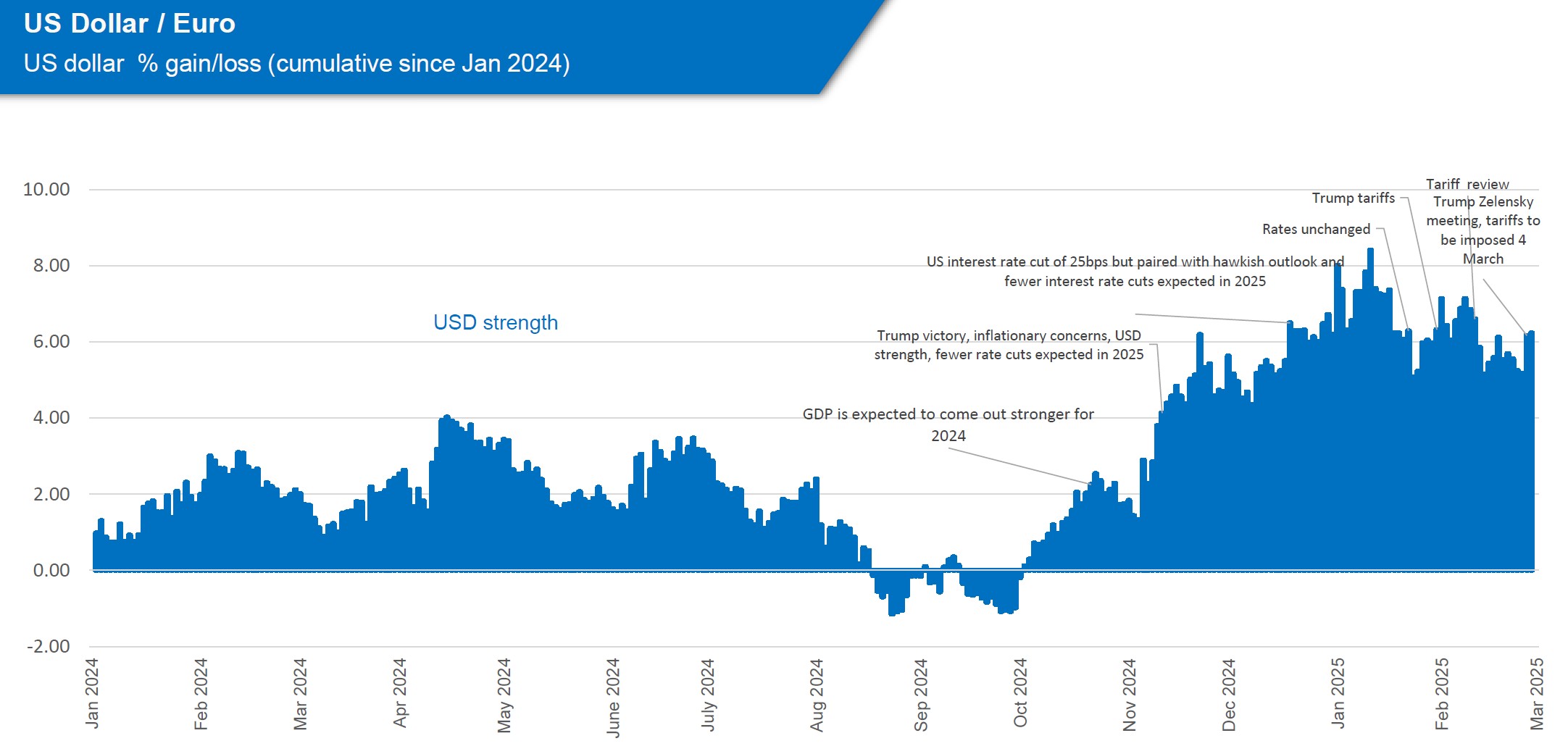
President Trump’s re-election in late 2024, often referred to as “Trump 2.0,” initially reignited a sense of American exceptionalism.
ANALYTICS - COMMENTARY FOR FEBRUARY:
SMARTIE BOX IN RANDS:
LOCAL MARKETS
__________________________
The finance minister was set to deliver the first budget under the new coalition government but postponed it after the cabinet failed to reach a consensus on the proposed VAT increase.
This marks the first delay since South Africa’s transition to democracy, and investors reacted negatively to the news. The disagreement exposed tensions within the GNU, though Minister Godongwana stressed the need for cabinet members to weigh the trade-offs required to finance the country’s expenditures.
After nearly a year without load shedding, South Africans faced two setbacks in February. Eskom’s CEO highlighted that structural improvements in the generation fleet have helped alleviate load shedding issues, though baseload capacity remains constrained. As unplanned outages persist, concerns are growing over their potential impact on economic activity.
Meanwhile, South African inflation rose to 3.2% in January from 3% in December, following adjustments to the inflation basket. The increase has heightened concerns about the country’s inflation outlook, particularly given the policies of the Trump administration. The SARB Governor warned that tariffs could disrupt the disinflation process, potentially reversing the trend of declining interest rates.
South Africa’s equity markets gained support from capital inflows into China, with Naspers and Prosus driving the market higher. However, resource stocks struggled, dragged down by weakness in platinum stocks. Local bonds also faced headwinds, as the budget speech delay underscored the fiscal risks facing the country.
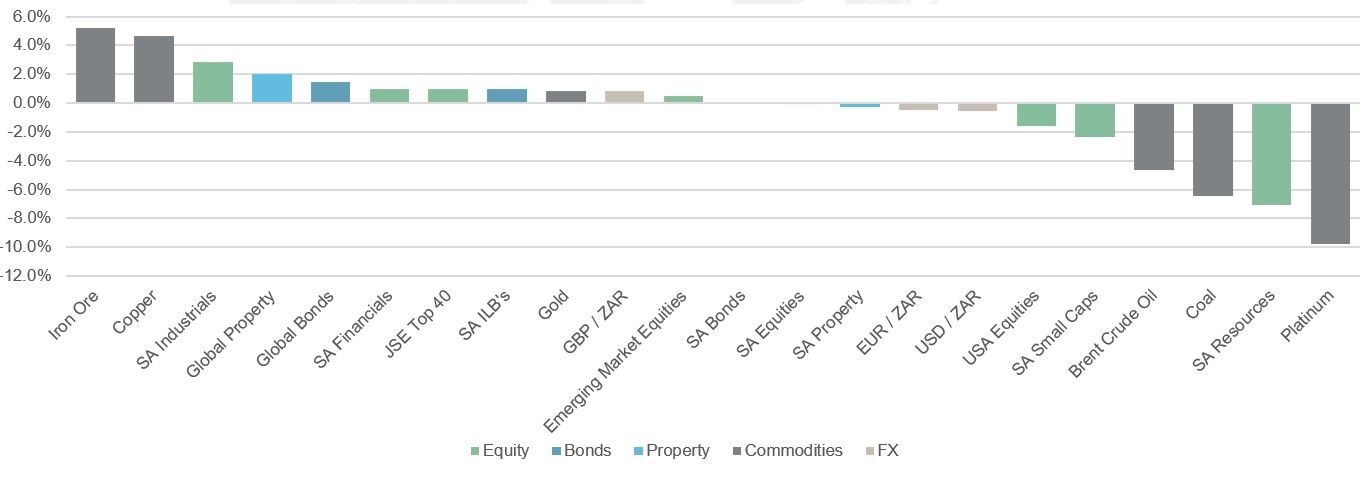
- The JSE All Share Index traded flat over February, down 0.0%.
- Resources (down 7.1%) reported a hard fall from January, while Industrials (up 2.8%) continued to climb, and Financials (up 1.0%) gained slightly.
- Small-caps (down 2.3%), and Mid-caps (down 4.2%) dropped, while Large-caps (up 1.0%) ended comfortably in the positive territory.
- Property had a volatile month, as the S&P SA REIT sector (up 1.5%) gained, and the SA Listed Property sector (down 0.3%) ended slightly lower.
- SA Nominal Bonds (up 0.1%) crept higher over the month, as Inflation Linked Bonds increased (up 0.9%).
- Emerging Market Equities outperformed Developed Market Equities in US Dollar terms. The MSCI World Index dropped 0.7% and the MSCI Emerging Market Index rose 0.5%.
- The rand had a mixed month, swayed more by the relative strength of the larger currencies over any domestic developments. Relative to the US Dollar (Rand appreciated 0.5%), the Euro (Rand appreciated 0.5%) and the Pound Sterling (Rand depreciated 0.8%).
- Commodity prices were mixed, as Gold (up 0.9%), Platinum (down 9.8%) and Brent Crude (down 4.7%).
2025 ASSET MANAGER PREDICTIONS
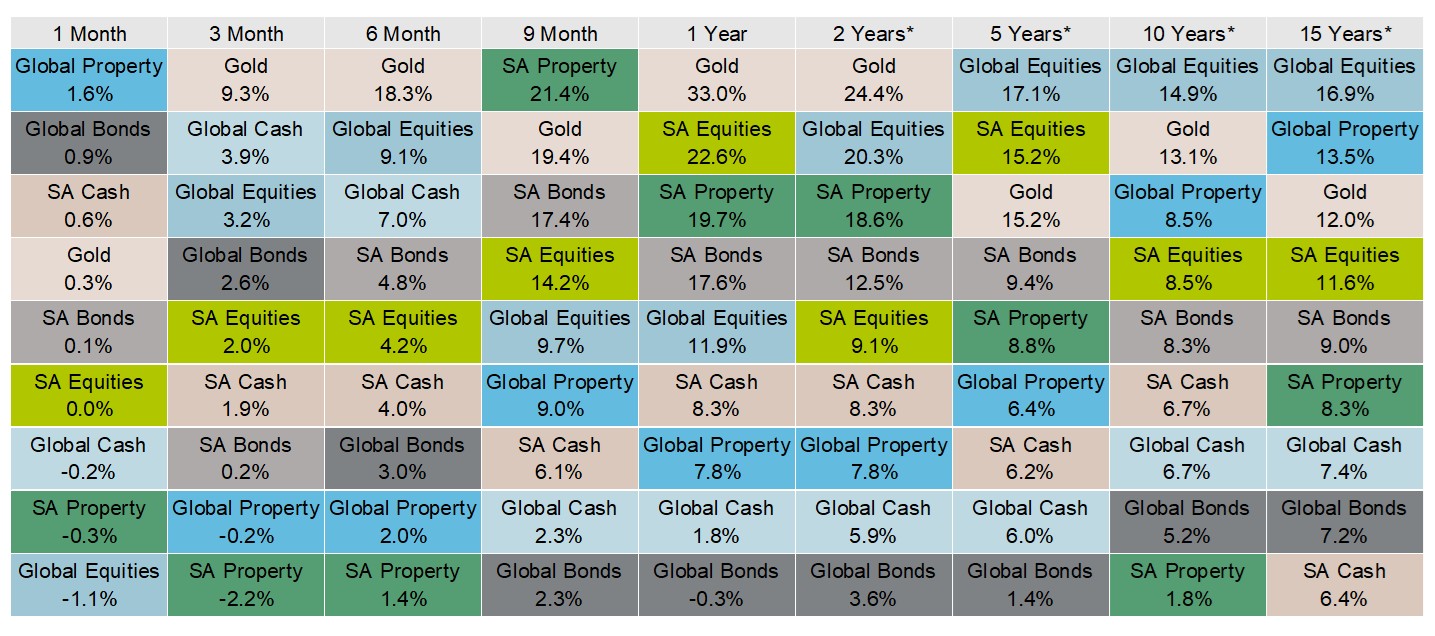
MONTHLY RETURNS: