INVESTMENT MARKET UPDATE
JULY 2025
What developments have unfolded in local and global markets throughout the month of JULY?
 30%
30%
Tariffs will be imposed on all SA exports to the US, with some exceptions
 100,000 Points
JSE All Share Index soared to a record high in July
 80%
80%
Of companies in the S&P 500 beat earnings forecasts

GLOBAL MARKET
_______________________
🌍 Global Markets: Growth, Tariffs & Tech-Led Optimism
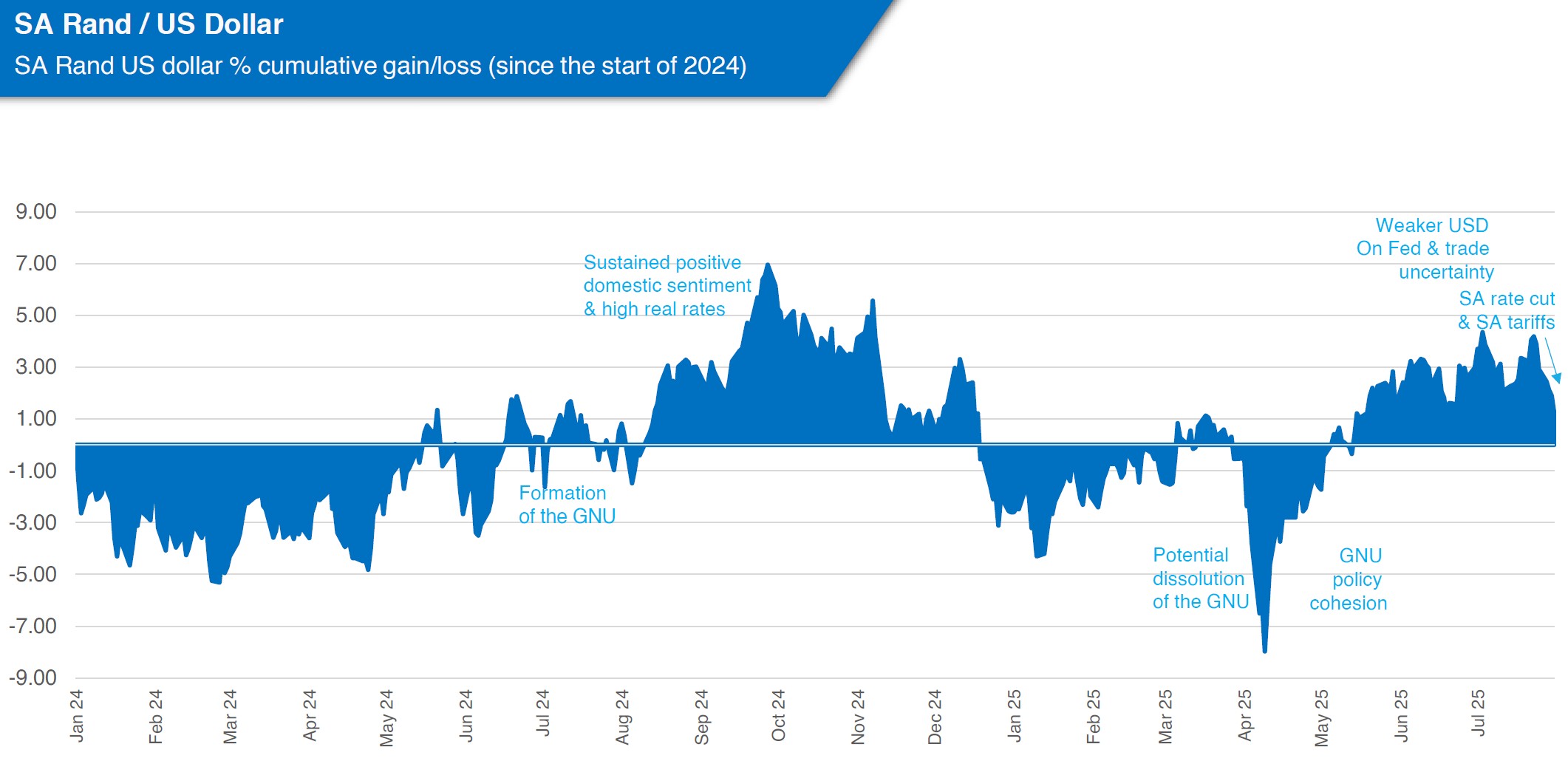
Rand / US Dollar:
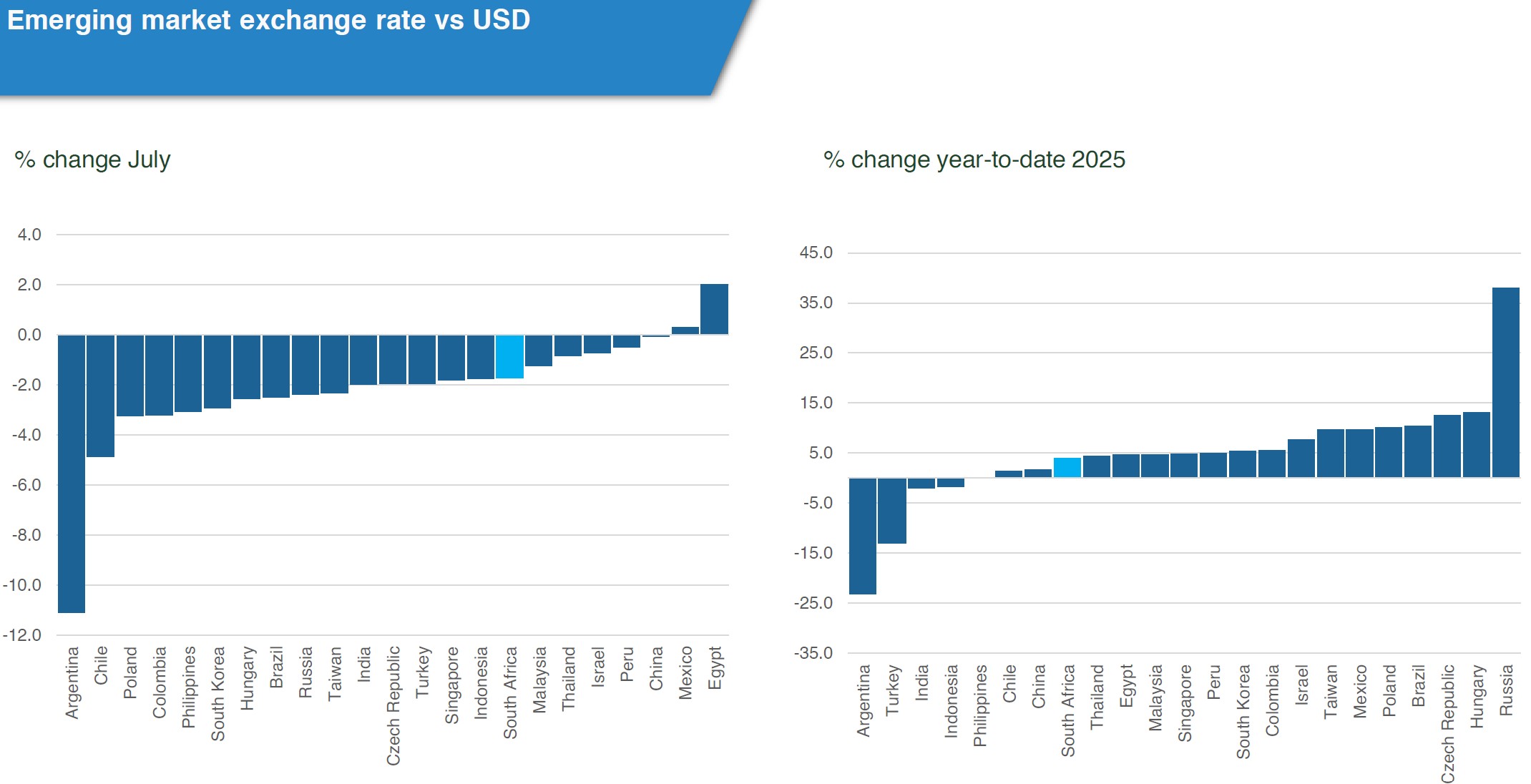
- In July, the Rand lost 1.7% against the USD, from a gain of 1.5% in June and 3.1% in May
- This compares with the long-term monthly average
• appreciation of 3.9%
• depreciation of -4.2%
Rand / Euro:
- In July, the Rand gained 0.5% against the EUR, lost 2.6% in June and from 4.0% in May.
- This compares with the long-term monthly average:
- appreciation of 2.8%
- depreciation of -3.2%
Rand / British Pound:
- In July, the Rand gained 1.8% against the GBP, flat in June and from 3.6% in May.
- This compares with the long-term monthly average
• appreciation of 3.1%
• depreciation of -3.1%
ANALYTICS - COMMENTARY FOR JULY:
SMARTIE BOX IN RANDS:
LOCAL MARKETS
__________________________
South African Markets: A Turning Point in Policy and Market Confidence
July 2025 marked a pivotal moment for South Africa’s economic and financial landscape, as the South African Reserve Bank (SARB) made a significant shift in its monetary policy stance. The repo rate was cut by 25 basis points to 7.00%, a move that was widely anticipated but still symbolically important.
In a notable policy pivot, Governor Lesetja Kganyago announced that the SARB would now aim to anchor inflation closer to the lower end of its 3%–6% target band, effectively targeting 3% over time. This dovish shift reflects growing confidence in the country’s inflation containment, supported by:
- Core inflation falling to 2.8%, the lowest level since 2021
- Headline inflation at 3.1%, well within the target range
- Declining breakeven rates, indicating subdued inflation expectations
This policy recalibration aligns South Africa with the global trend of gradual monetary easing and is expected to:
- Stimulate domestic investment and consumption
- Enhance the appeal of local bonds and equities
- Act as a stabilising force for capital markets
⚠️Geopolitical Risks: Trade Tensions with the U.S.
While monetary policy brought optimism, geopolitical developments introduced new risks. The U.S. imposed tariffs of up to 39% on key South African exports, including agricultural and automotive goods. Although President Ramaphosa engaged in direct negotiations to delay or soften these measures, the threat remains substantial, with potential implications for:
- Up to 100,000 jobs
- Export competitiveness
- Investor sentiment and capital flows
These developments have injected volatility into local capital markets, particularly in sectors sensitive to global trade and commodity cycles. The uncertainty surrounding South Africa’s trade relationship with the U.S. could influence portfolio allocations, especially among foreign investors. Despite the geopolitical headwinds, South African financial markets delivered strong performance in July, supported by: Lower interest rates, Contained inflation, Improved fiscal clarity following the passage of the Appropriations Bill. JSE All Share Index briefly crossed the 100,000-point milestone for the first time, before closing at 98,519 and gains were broad-based, reflecting renewed investor confidence.
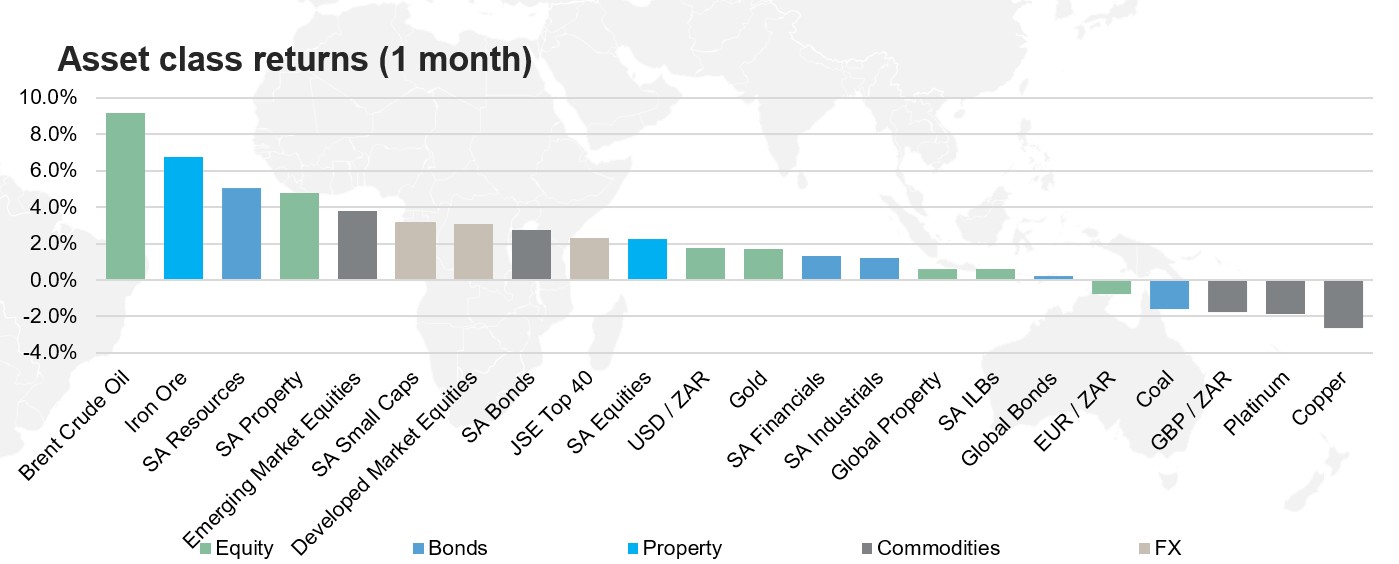
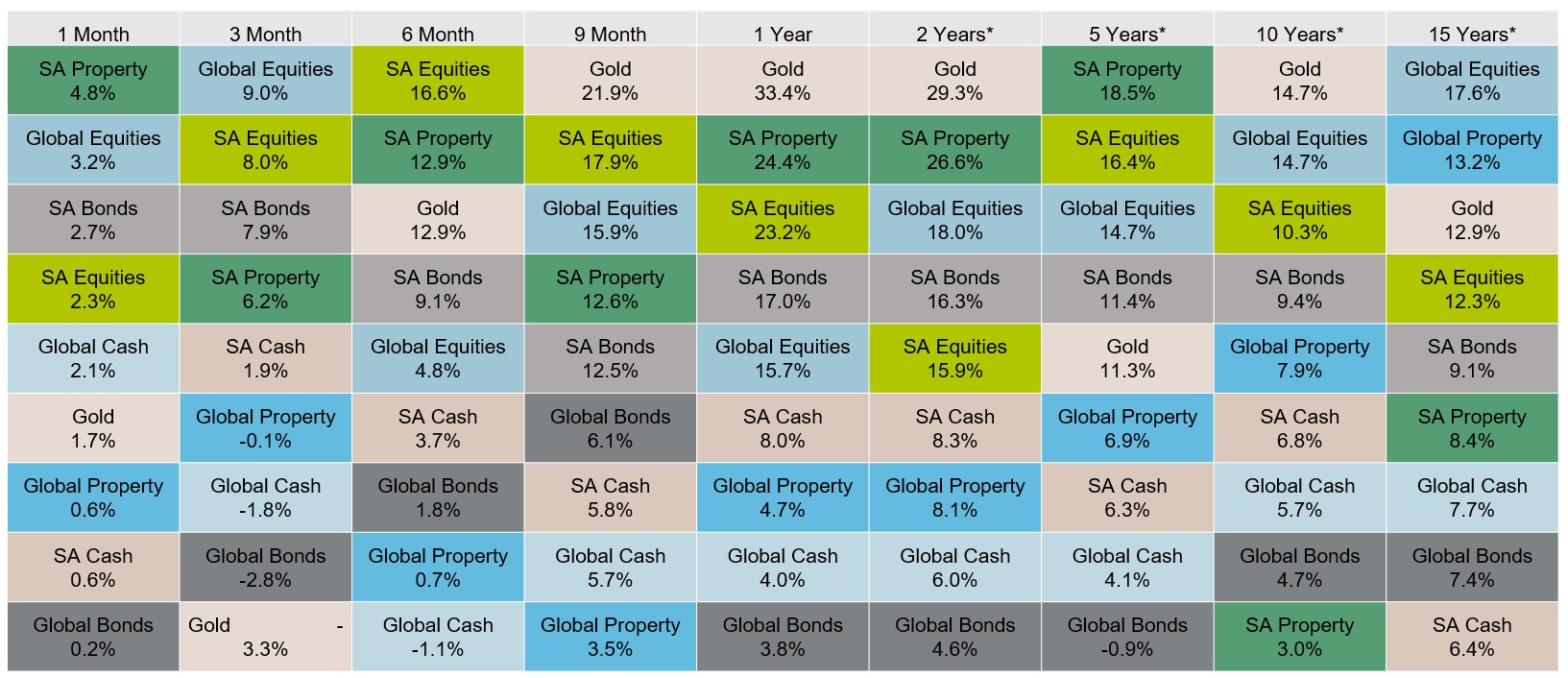
- The JSE All Share recorded its fifth straight month of gains, up 2.3%.
- All three major sectors supported the bourse, as Industrials (up 2.5%), Financials (up 1.3%) continued to grow, while Resources (up 5.1%) rocketed higher.
- Small-caps (up 3.1%) and Mid-caps (up 3.3%) boasted healthy returns, outperforming their larger peers, as the Large-caps (up 2.3%) reported modest gains.
- The SA Property markets beast most other asset classes in July, as the ALPI added 4.8%, and the S&P SA REIT index grew 6.0%.
- SA Nominal Bonds (up 2.7%) continued their positive performance. Inflation-Linked Bonds inched higher, up 0.6% as SA inflation remains muted.
- Developed Market Equities closed higher in US dollar terms, as the MSCI World Index rose 1.3%, however, their emerging market peers continued to outperform, as the MSCI Emerging Market Index soared 2.0% higher.
- The rand had a mixed month in terms of performance, as the US dollar weakened, but other major currencies appreciated. Relative to the US Dollar (Rand appreciated 1.8%), the Euro (Rand depreciated 0.8%) and the Pound Sterling (Rand depreciated 1.7%).
- Resources were generally lower, as Gold (up 0.0%) and Platinum (down 1.7%) dropped. Brent Crude gained 7.3% over the month, as geopolitical tensions escalated.
Everything you need to know about tax-free investments
Inflation, tax and your fixed deposit
MONTHLY RETURNS: