INVESTMENT MARKET UPDATE
OCTOBER 2025
What developments have unfolded in local and global markets throughout the month of OCTOBER?
 60%
60%
World equity markets have reached all-time highs over the last 21 days.
 3.2%
3.2%
SA core inflation ticked up above expectations of an unchanged rate.
 8.4%
8.4%
SA financials highest month since June 2024.

ADVANTAGE - OCTOBER COMMENTARY:
GLOBAL MARKETS
__________________
🌐 Global Markets: Central Banks Pivot, Risk Appetite Returns, and Geopolitics Stir the Pot
October saw a renewed wave of optimism sweep across global markets. The US Federal Reserve’s rate cut and a broad disinflation trend—especially from falling energy and food prices—helped ease real funding costs and boosted investor sentiment. Equity markets responded with strength: the MSCI World Index rose as corporate earnings and the prospect of lower rates supported valuations, particularly in technology and real estate sectors.
Emerging markets outperformed, with the MSCI Emerging Markets Index surging on the back of exceptional gains in Asia—notably Korea and Taiwan, driven by AI and semiconductor demand. European equities also posted gains, buoyed by GDP surprises and easing inflation, though the region continued to wrestle with fiscal uncertainty and political fragmentation. Meanwhile, Japan’s Nikkei 225 soared, powered by robust exports and a weaker yen.
Despite these positives, geopolitical risks—from the US government shutdown to trade tensions with China and ongoing conflicts in the Middle East and Ukraine—kept volatility elevated. Bond markets reflected the divergence in global monetary policy: while the Fed’s easing supported risk assets and emerging market flows, the ECB and Bank of England held rates steady, limiting upside for European equities and contributing to bond volatility. Gold hit a record high mid-month before reversing, and oil prices remained under pressure.
The story of October was one of cautious optimism, with global liquidity creating a tailwind for risk assets and improving diversification for multi-asset portfolios.
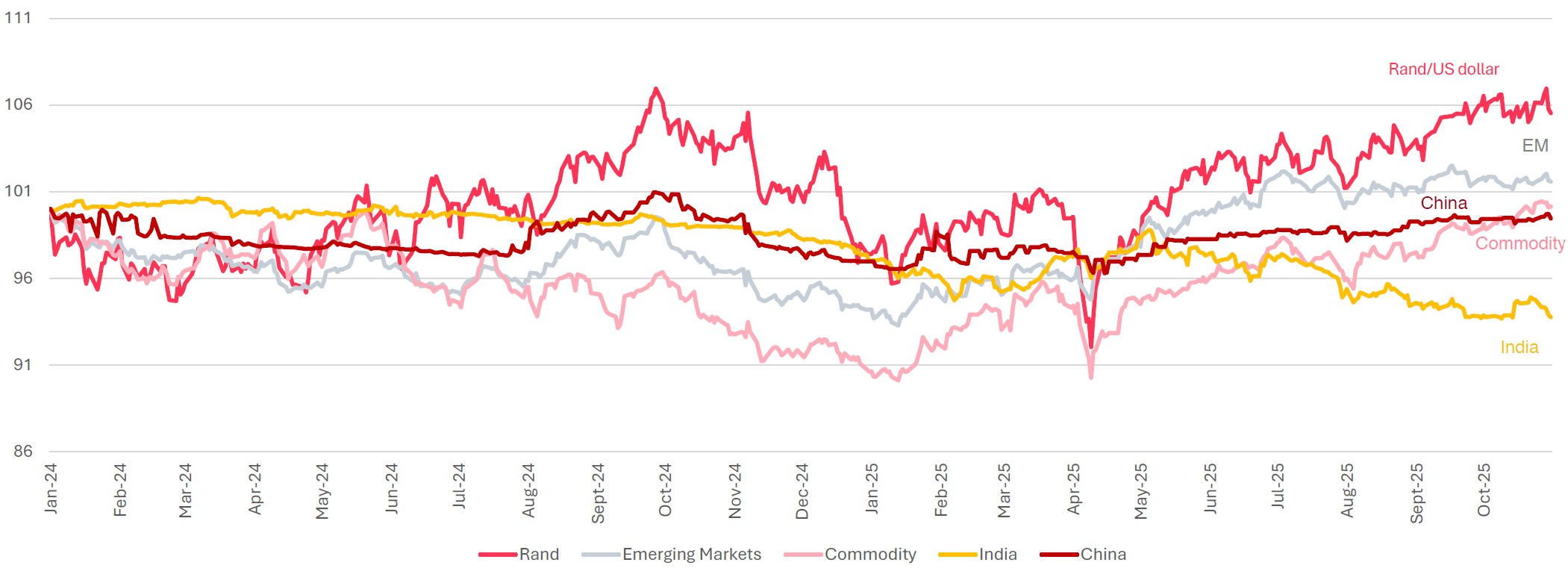
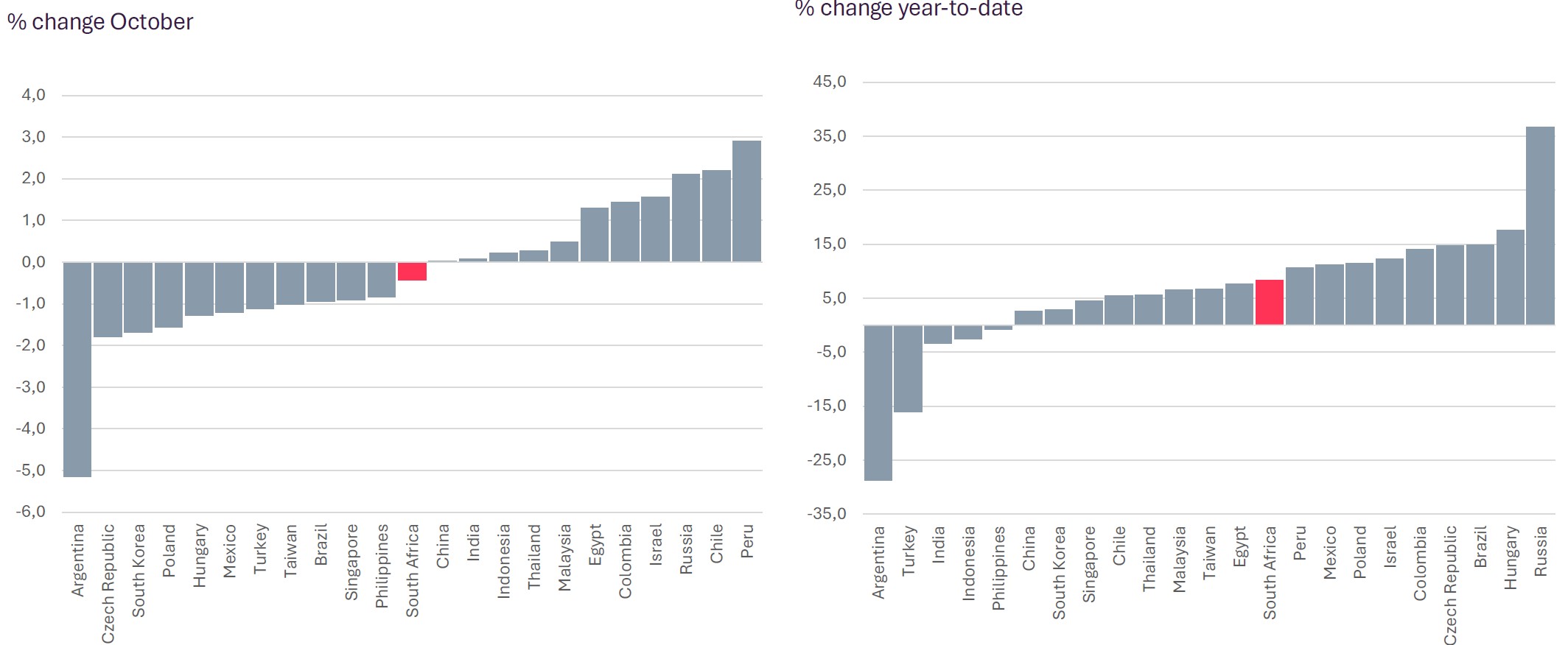
Rand / US Dollar:
- In October, the Rand lost 0.4% against the USD, from a gain of 2.4% in September
- This compares with the long-term monthly average appreciation of 3.9% and depreciation of -4.2%
Rand / Euro:
- In October, the Rand gained 1.2% against the EUR, from a gain of 1.9% in September
- This compares with the long-term monthly average appreciation of 2.8% and depreciation of -3.2%
Rand / British Pound:
- In October, the Rand gained 2.0% against the GBP, from a gain of 2.9% in September
- This compares with the long-term monthly average appreciation of 3.1% and depreciation of -3.1%
SMARTIE BOX IN RANDS:

LOCAL MARKETS
__________________
South African Markets: Grey List Exit Ignites Rally, Policy Stability Anchors Growth
South African markets delivered a standout performance in October, driven by landmark policy achievements and improving fundamentals. The headline event was South Africa’s removal from the FATF grey list, a milestone that boosted investor confidence, especially in the financial sector, and triggered renewed foreign inflows into local bonds and equities.
The South African Reserve Bank (SARB) maintained a steady hand, holding the repo rate at 7%. With inflation expected to rise only slightly and remain contained, this stable interest rate environment benefited fixed-income allocations and enhanced the attractiveness of duration exposure. For multi-asset portfolios, a predictable rate path underpinned confidence in local currency assets and helped mitigate risk premiums.
Equities extended their winning streak, with the FTSE/JSE Capped SWIX Index notching its eighth consecutive month of gains. The rally was led by financials—their strongest month since mid-2024—with Capitec, Discovery, and MTN as notable outperformers. Listed property stocks also surged, benefiting from lower bond yields. In contrast, the resources sector lagged, with gold and platinum miners underperforming.
South Africa’s consecutive primary budget surpluses and progress on structural reforms—notably in infrastructure and energy reliability—further strengthened fiscal credibility and reduced sovereign risk. The rand appreciated against major currencies, reflecting increased foreign inflows and improved fiscal standing.
October marked a turning point for South African markets, with policy stability, structural reforms, and global liquidity combining to create a constructive environment for investors.
new consolidated quarterly reports
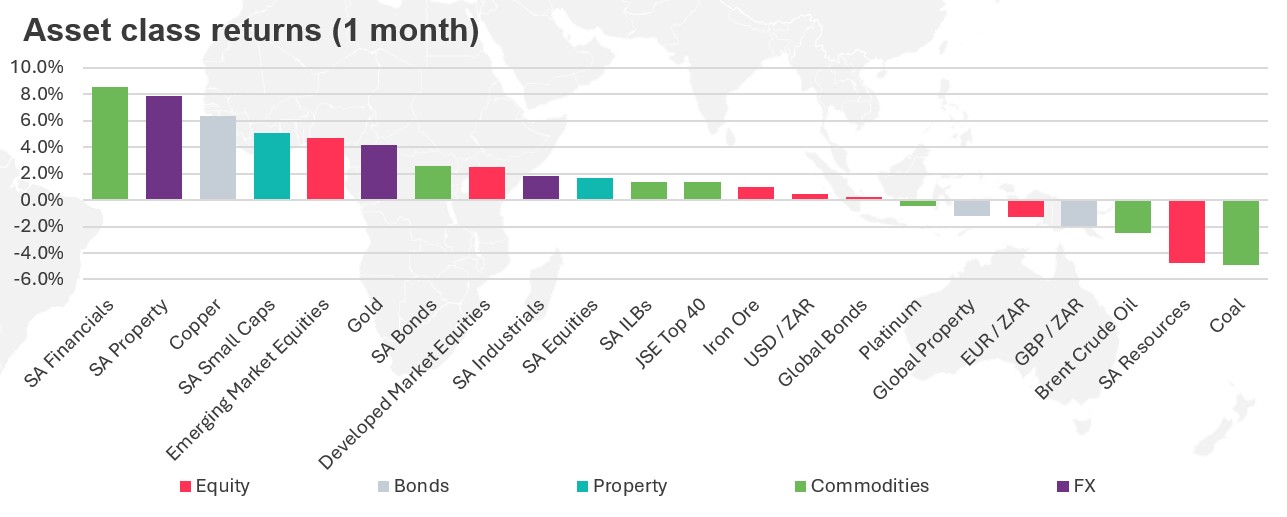
- The JSE All Share continued to climb, ending the month up 1.6%.
- Resources were a drag to the broader bourse (down 4.8%), as Industrials inched higher (up 1.8%), and Financials did the heavy lifting (up 8.5%).
- Small-caps (up 5.0%) boasted strong gains for the month, as Mid-caps (up 1.4%) outperformed Large-caps (up 1.3%) which was still well in positive territory.
- SA Property markets skyrocketed in October, on the back of lower bond yields. The ALPI added 7.8%, while the S&P SA REIT index reported 11.7%.
- SA Nominal Bonds (up 2.6%) gained ground, while Inflation-Linked Bonds crawled into positive territory (up 1.4%).
- Developed Market Equities had a strong performance, as the MSCI World Index (up 2.0% in USD) but still underperformed its emerging market peers, as the MSCI Emerging Market Index soared (up 4.2% in USD).
- The Rand had a mixed performance, as the dollar strengthened. Relative to the US Dollar (Rand depreciated 0.5%), the Euro (Rand appreciated 1.3%) and the Pound Sterling (Rand appreciated 2.0%).
- Platinum shrunk back after last month’s gains (down 0.9%), as Gold (up 3.7%) had another strong month while Brent Crude (down 2.9%).
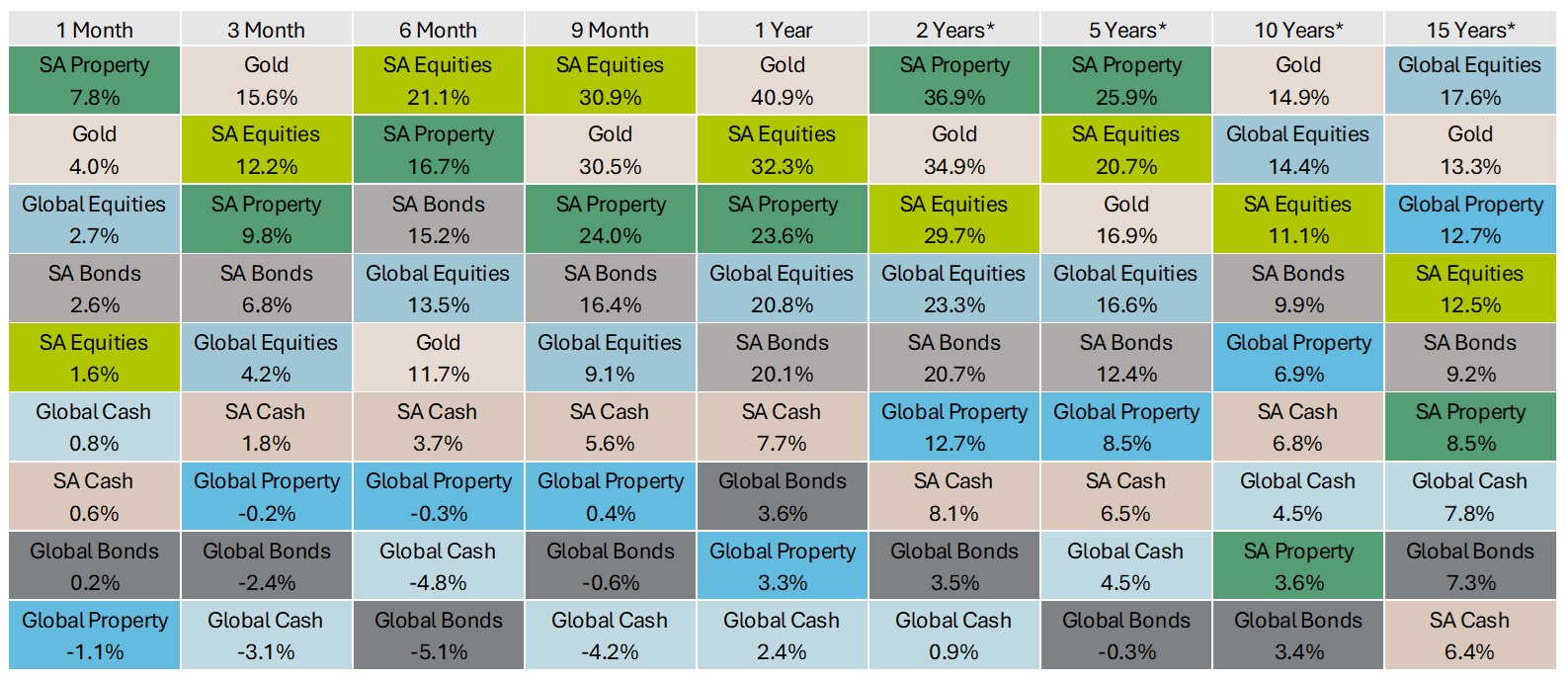
MONTHLY RETURNS: