INVESTMENT MARKET UPDATE
APRIL 2025
What developments have unfolded in local and global markets throughout the month of APRIL?

 2.7%
2.7%
SA Headline y/y inflation slowed to below consensus
 1.0%
1.0%
IMF downgraded SA’s 2025 GDP Forecast
 $3500/oz
Gold surged in April
GLOBAL MARKET
_______________________
Markets Rebound After Tumultuous Start to April
ANALYTICS - COMMENTARY FOR APRIL:
SMARTIE BOX IN RANDS:

LOCAL MARKETS
__________________________
South African Markets Hold Firm Amid Political and Economic Crosswinds
South African equities extended their strong run in April, outperforming both developed and emerging market peers. The local bond market, initially under pressure, rebounded later in the month as expectations of a potential interest rate cut by the South African Reserve Bank (SARB) gained momentum.
Inflation data provided a boost to sentiment. Headline CPI slowed to 2.7% year-on-year—well below expectations—while core inflation dropped to a cyclical low of 3.1%. These figures strengthened the case for a more accommodative monetary policy, though SARB Governor Lesetja Kganyago remains cautious, citing global risks and domestic challenges such as load shedding and rising tariffs.
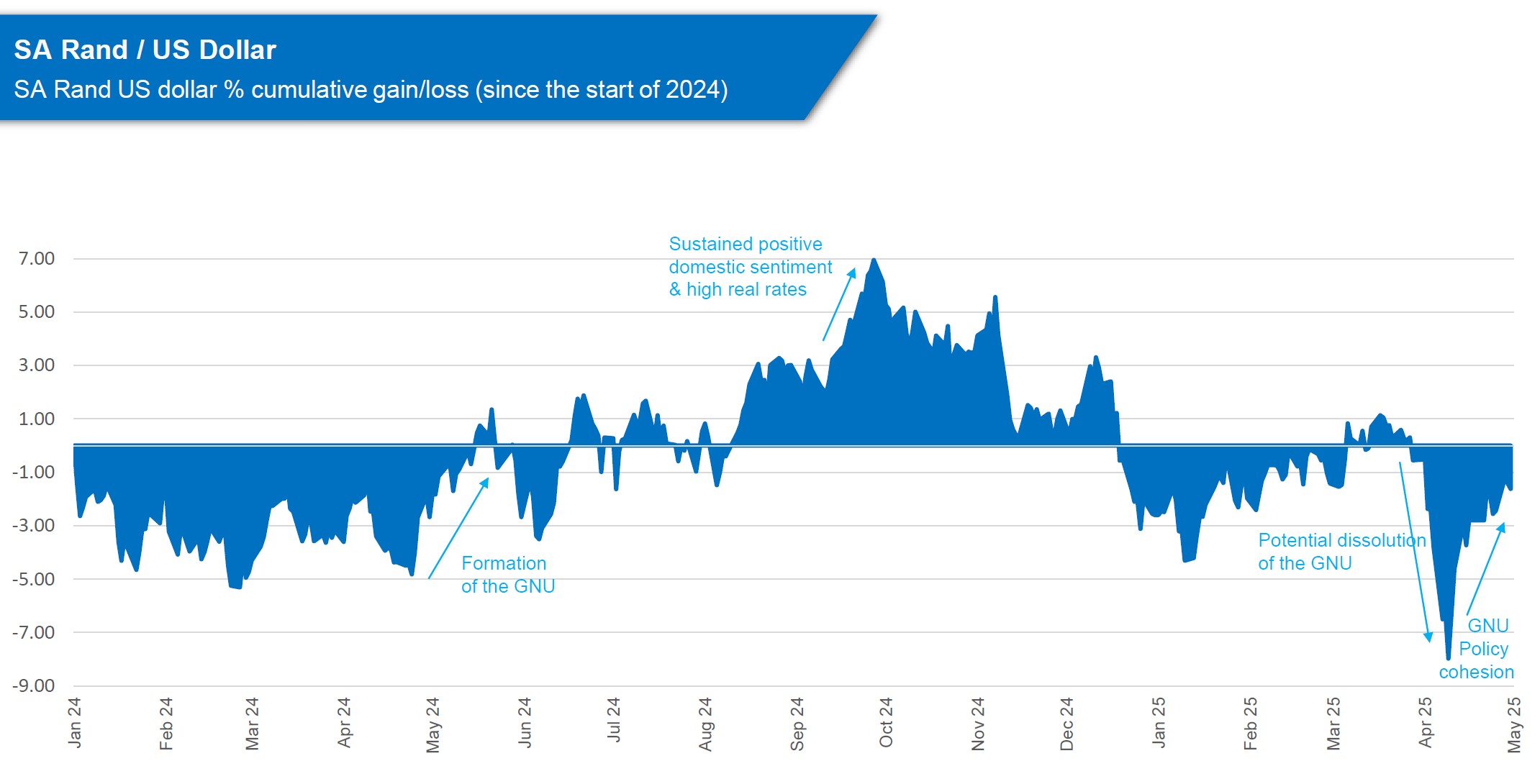
Political developments added to market uncertainty. The Government of National Unity (GNU) reversed a controversial VAT hike following widespread protests and a high court suspension. The move, seen as a response to mounting political pressure, raised concerns about fiscal credibility and policy consistency. Finance Minister Enoch Godongwana’s reversal on the VAT increase has deepened investor unease, while the ANC has called for a more structured decision-making process within the GNU.
Consumer confidence plunged to multi-year lows, and the rand remained under pressure amid ongoing political and fiscal ambiguity. Meanwhile, economic indicators painted a mixed picture. Retail sales and mining output disappointed, and leading indicators suggest a weakening growth outlook despite improved trade data and stronger reserves supported by elevated gold prices.
Reflecting these headwinds, several institutions revised their 2025 GDP forecasts downward. The IMF now expects just 1.0% growth, down from 1.5%, while SARB trimmed its estimate to 1.7%. Private sector analysts, including Moody’s and the Bureau for Economic Research, have also lowered their projections to around 1.5%, citing weak business confidence, high unemployment, and persistent structural constraints.
While easing inflation opens the door for potential rate cuts, South Africa’s path to recovery remains clouded by deep-rooted economic and political challenges.
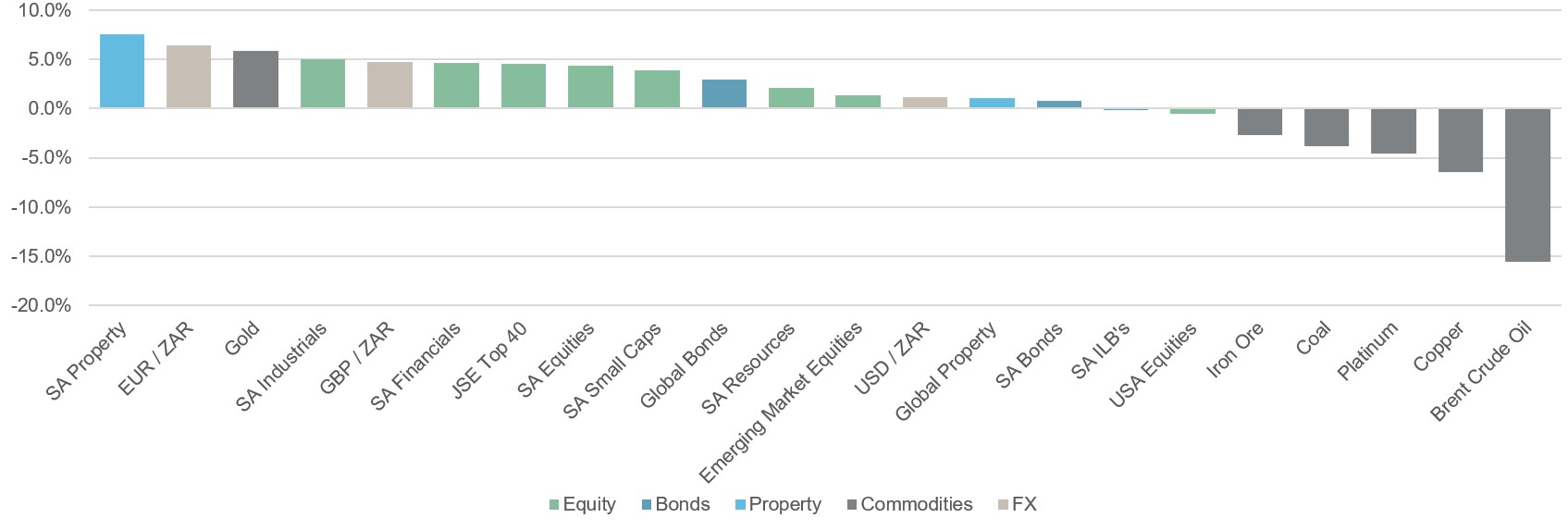
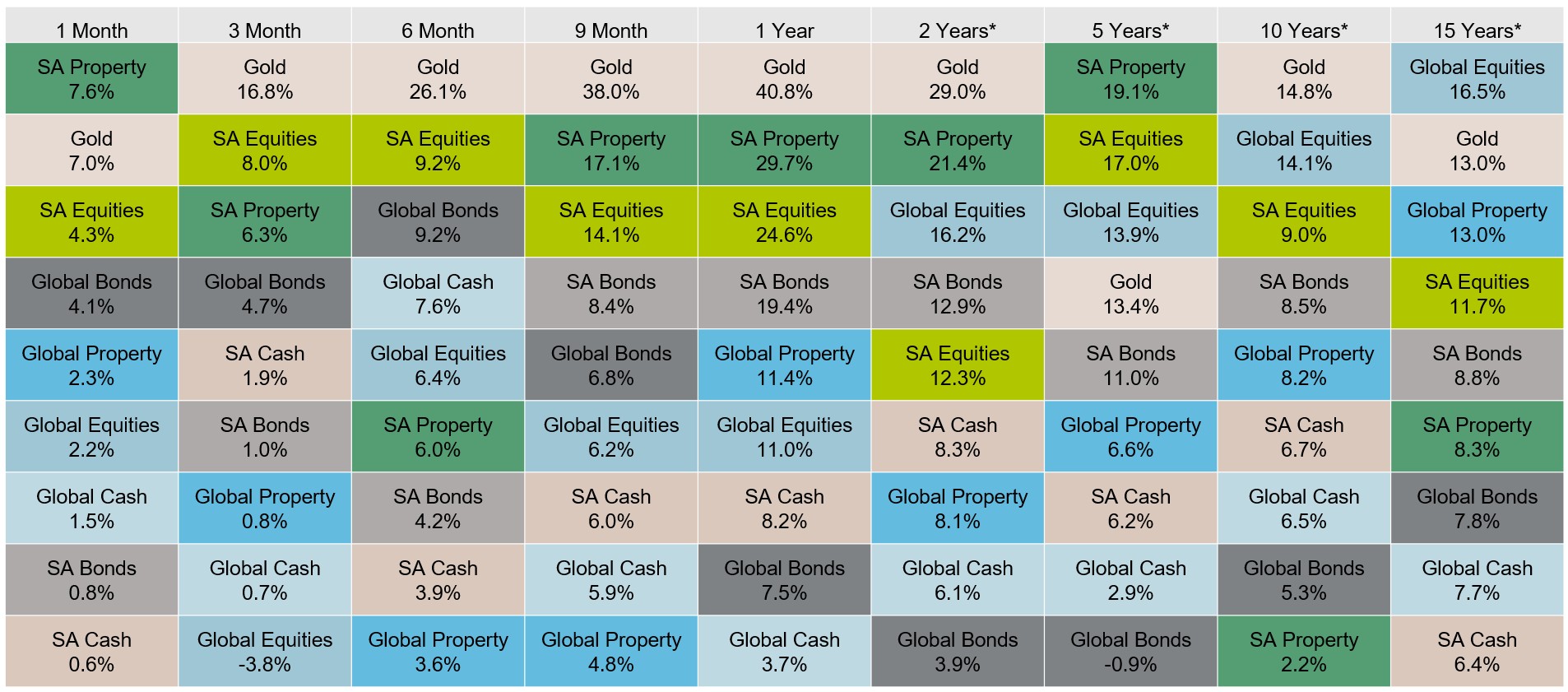
- The JSE All Share traded sharply higher in April, up 4.3%.
- Industrials (up 5.0%) bounced back in April, Financials (up 4.6%) and Resources (up 2.1%) also managed to deliver positive returns.
- Small-caps (up 3.9%), Mid-caps (up 2.2%) and Large-caps (up 4.5%) delivered strong gains.
- SA Property rebounded strongly in April, gaining 10.3%, while the S&P SA REIT index also recovered, rising 8.0% over the month.
- SA Nominal Bonds (up 0.8%) crept higher again over the month as bond yields continued to move higher, while Inflation-Linked Bonds were negative, down 0.1%.
- Emerging Market Equities outperformed Developed Market Equities in US Dollar terms again in April. The MSCI World Index rose 0.9% and the MSCI Emerging Market Index rose 1.3%.
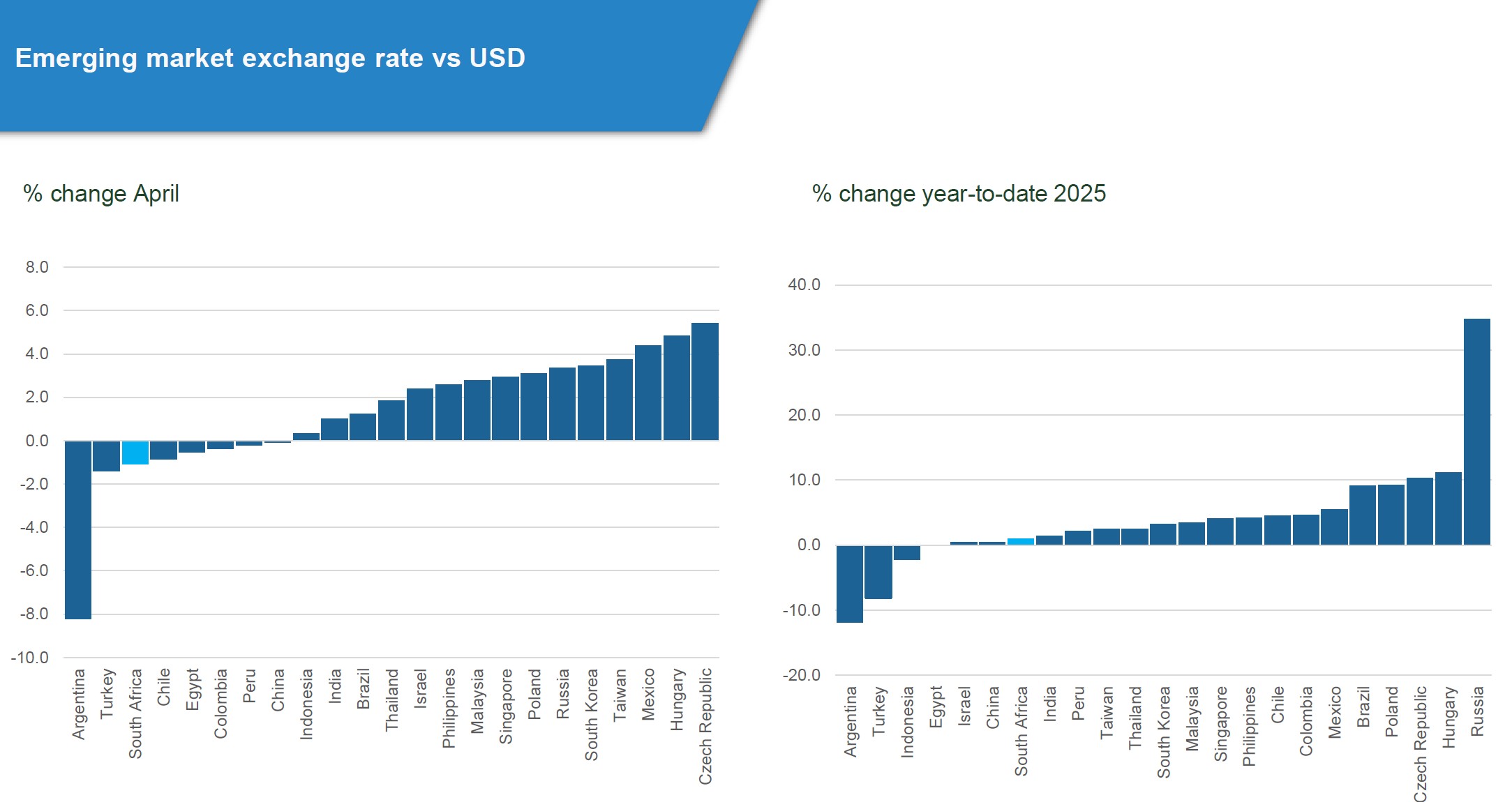
- Relative to the US Dollar (Rand depreciated 1.2%), the Euro (Rand depreciated 6.5%) and the Pound Sterling (Rand depreciated 4.7%).
- Gold prices surged 5.8% in April, while Platinum fell by 4.5%. Brent Crude experienced a sharp decline, dropping 15.5% over the month.
Inflation, tax and your fixed deposit
MONTHLY RETURNS: