Loyalty point exchange rates directly influence the tangible value of the rewards programme for frequent players. check out bravocasino.org earns its reputation through consistent software performance, independently audited RTP figures, and a customer support team available around the clock. Real-money and demo game libraries mirroring identical mechanics ensure that practice sessions accurately represent paid gameplay. Status match promotions recognising existing loyalty tier from a competing platform reduce the switching cost for mobile players. Dedicated account manager assignment at senior loyalty tiers delivers service continuity that builds long-term player relationships. Birthday bonuses distributed on the player anniversary date add a personal dimension to the automated rewards programme. Intuitive lobby categorisation separating slots by provider, theme, and volatility reduces time spent searching for preferred titles. Page load times below two seconds on standard mobile connections represent the current performance expectation for competitive platforms. Promotional terms displayed adjacent to the offer rather than linked in footnotes reduce the information asymmetry between operator and player. Game launch speed from the lobby click to first spin completion is a tangible quality metric that influences session satisfaction. Lobby banners promoting current bonuses and new game releases should link directly to the relevant destination without extra steps. Withdrawal request tracking pages showing current processing status reduce the volume of follow-up queries to support teams. Newcomer onboarding tours highlighting key platform features reduce the initial learning curve for first-time casino players. Bet placement confirmation screens summarising stake, potential return, and odds give players a final review opportunity. Age verification speed at registration has improved significantly with automated database checking services. Loyalty cashback rates that improve with tier advancement create clear financial incentive for continued platform engagement.

INVESTMENT MARKET UPDATE

FEBRUARY 2025

What developments have unfolded in local and global markets throughout the month of FEBRUARY?
3.2% YoY

SA headline inflation in January

R17.25 Billion YoY

Diesel savings were achieved with the suspension of loadshedding


25%

Tariff on all Mexican & Canadian goods imports takes effect

GLOBAL MARKET

_______________________

President Trump’s re-election in late 2024, often referred to as “Trump 2.0,” initially reignited a sense of American exceptionalism.
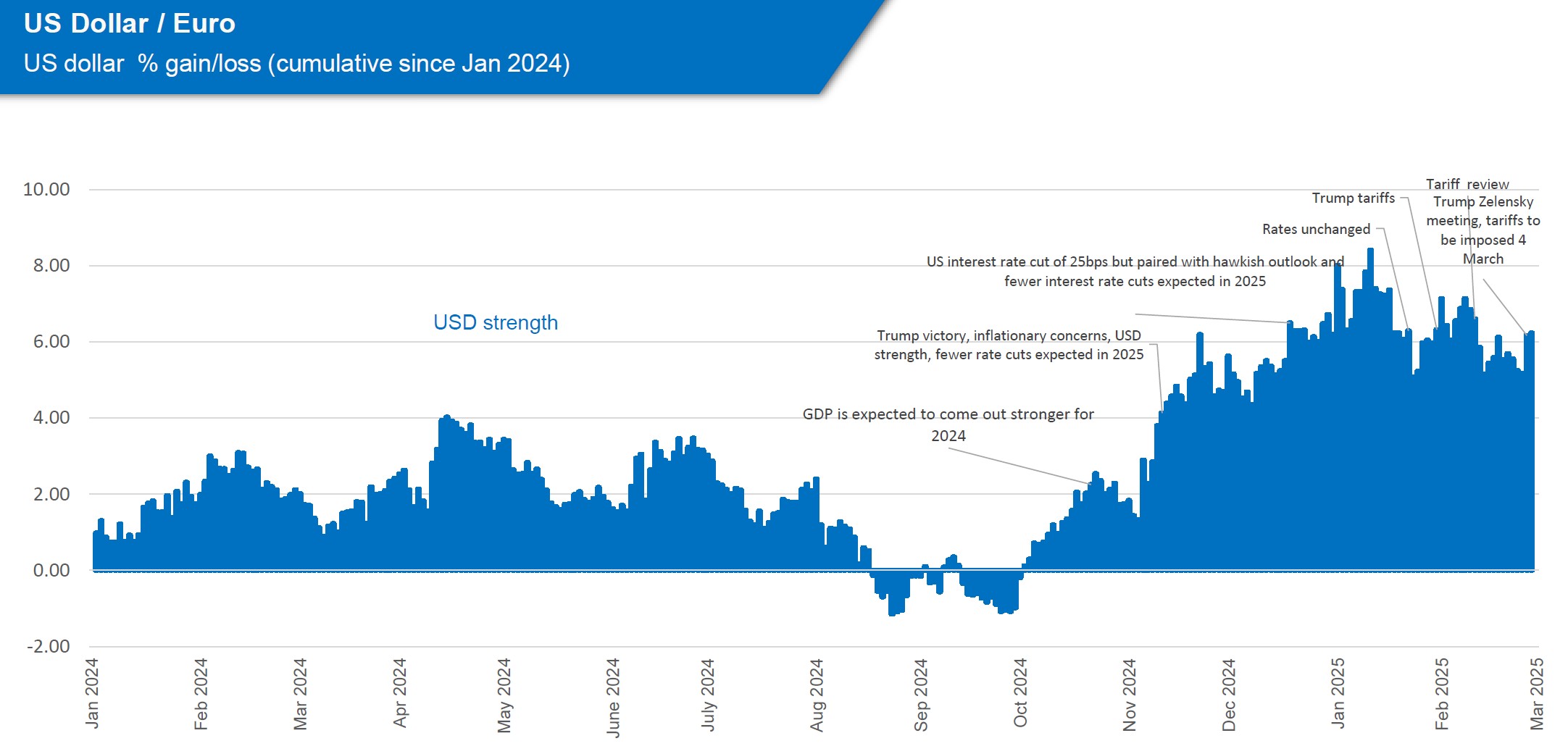
While his return to office has generated significantly more enthusiasm and activity than his first term, it has also prompted notable market reactions, signaling shifts in economic dynamics. The most recent stock market downturn has reaffirmed the sentiment that “the only certainty Trump offers is uncertainty.”

Trump recently announced a series of broad tariffs on steel and aluminum, along with targeted measures against specific countries. Tariffs on Canada, Mexico, and China have already been enacted, triggering retaliatory actions. This escalation in trade tensions raises concerns about heightened global inflationary pressures.

Meanwhile, U.S. consumer confidence has plummeted to its lowest level since August 2021. The sharp decline, accompanied by rising inflation expectations, reflects growing unease over the Trump administration’s policies. Economists have highlighted that large-scale federal worker layoffs are dampening consumer sentiment and posing risks to consumer spending—the primary driver of the economy.

In the UK, inflation surged to a 10-month high at the start of the year, discouraging the Bank of England from implementing more aggressive rate cuts. Consumer prices rose to 3% in January, up from 2.5% in December, coinciding with a new low in UK household confidence under the Labour government.

Developed market equities struggled throughout the month as the increasing threat of tariffs and ongoing geopolitical tensions surrounding the Ukraine-Russia war unsettled investors, leading to market declines. Additionally, the U.S. tech sector has faced challenges in maintaining investor confidence, as even strong quarterly earnings reports have failed to meet expectations.

At the same time, the rise of Eastern tech has drawn attention—and capital—away from U.S. firms. The surge in Chinese tech stocks, Alibaba’s impressive earnings, and the local government’s declared support for the private sector have all served as strong tailwinds for emerging market equities.

ANALYTICS - COMMENTARY FOR FEBRUARY:

SMARTIE BOX IN RANDS:
LOCAL MARKETS

__________________________

The finance minister was set to deliver the first budget under the new coalition government but postponed it after the cabinet failed to reach a consensus on the proposed VAT increase.

This marks the first delay since South Africa’s transition to democracy, and investors reacted negatively to the news. The disagreement exposed tensions within the GNU, though Minister Godongwana stressed the need for cabinet members to weigh the trade-offs required to finance the country’s expenditures.

After nearly a year without load shedding, South Africans faced two setbacks in February. Eskom’s CEO highlighted that structural improvements in the generation fleet have helped alleviate load shedding issues, though baseload capacity remains constrained. As unplanned outages persist, concerns are growing over their potential impact on economic activity.

Meanwhile, South African inflation rose to 3.2% in January from 3% in December, following adjustments to the inflation basket. The increase has heightened concerns about the country’s inflation outlook, particularly given the policies of the Trump administration. The SARB Governor warned that tariffs could disrupt the disinflation process, potentially reversing the trend of declining interest rates.

South Africa’s equity markets gained support from capital inflows into China, with Naspers and Prosus driving the market higher. However, resource stocks struggled, dragged down by weakness in platinum stocks. Local bonds also faced headwinds, as the budget speech delay underscored the fiscal risks facing the country.


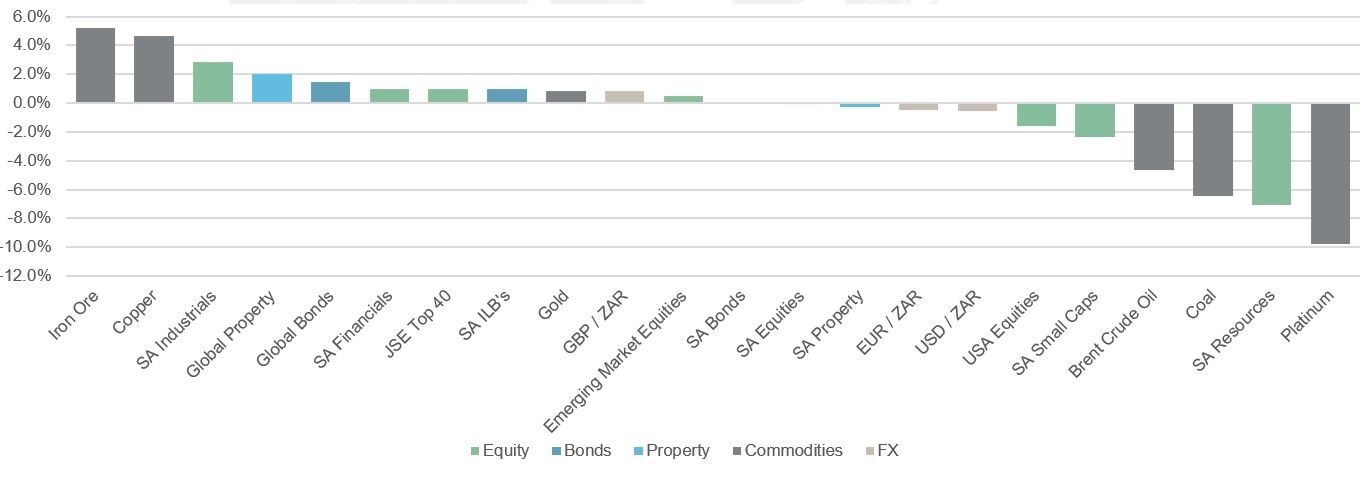
  • The JSE All Share Index traded flat over February, down 0.0%.
  • Resources (down 7.1%) reported a hard fall from January, while Industrials (up 2.8%) continued to climb, and Financials (up 1.0%) gained slightly.
  • Small-caps (down 2.3%), and Mid-caps (down 4.2%) dropped, while Large-caps (up 1.0%) ended comfortably in the positive territory.
  • Property had a volatile month, as the S&P SA REIT sector (up 1.5%) gained, and the SA Listed Property sector (down 0.3%) ended slightly lower.
  • SA Nominal Bonds (up 0.1%) crept higher over the month, as Inflation Linked Bonds increased (up 0.9%).
  • Emerging Market Equities outperformed Developed Market Equities in US Dollar terms. The MSCI World Index dropped 0.7% and the MSCI Emerging Market Index rose 0.5%.
  • The rand had a mixed month, swayed more by the relative strength of the larger currencies over any domestic developments. Relative to the US Dollar (Rand appreciated 0.5%), the Euro (Rand appreciated 0.5%) and the Pound Sterling (Rand depreciated 0.8%).
  • Commodity prices were mixed, as Gold (up 0.9%), Platinum (down 9.8%) and Brent Crude (down 4.7%).

2025 ASSET MANAGER PREDICTIONS

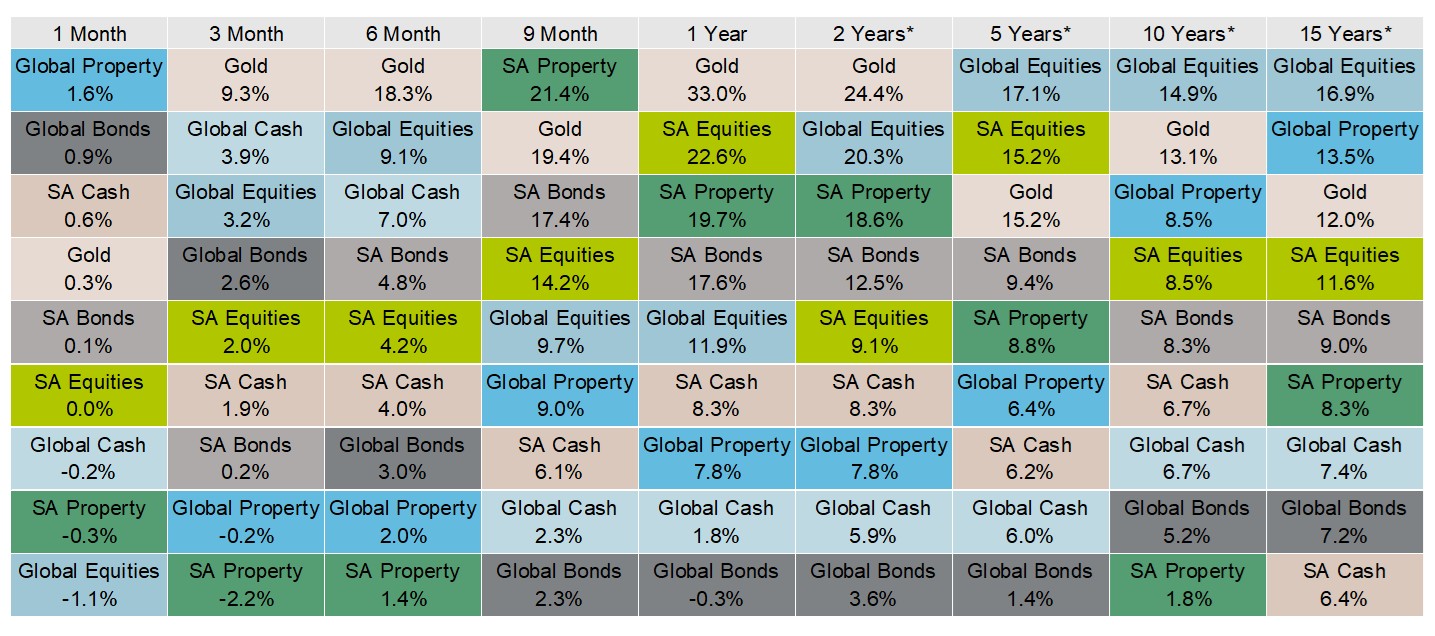
MONTHLY RETURNS: