INVESTMENT MARKET UPDATE
JANUARY 2026
What developments have unfolded in local and global markets throughout the month of JANUARY?
 -30%
-30%
Silver records its largest-ever daily drop, crashing 30% on 30 Jan 2026.
 10.5 Million
The number of foreign visitors welcomes in SA in 2025, a 17.6% increase since 2024.
 41.28ct
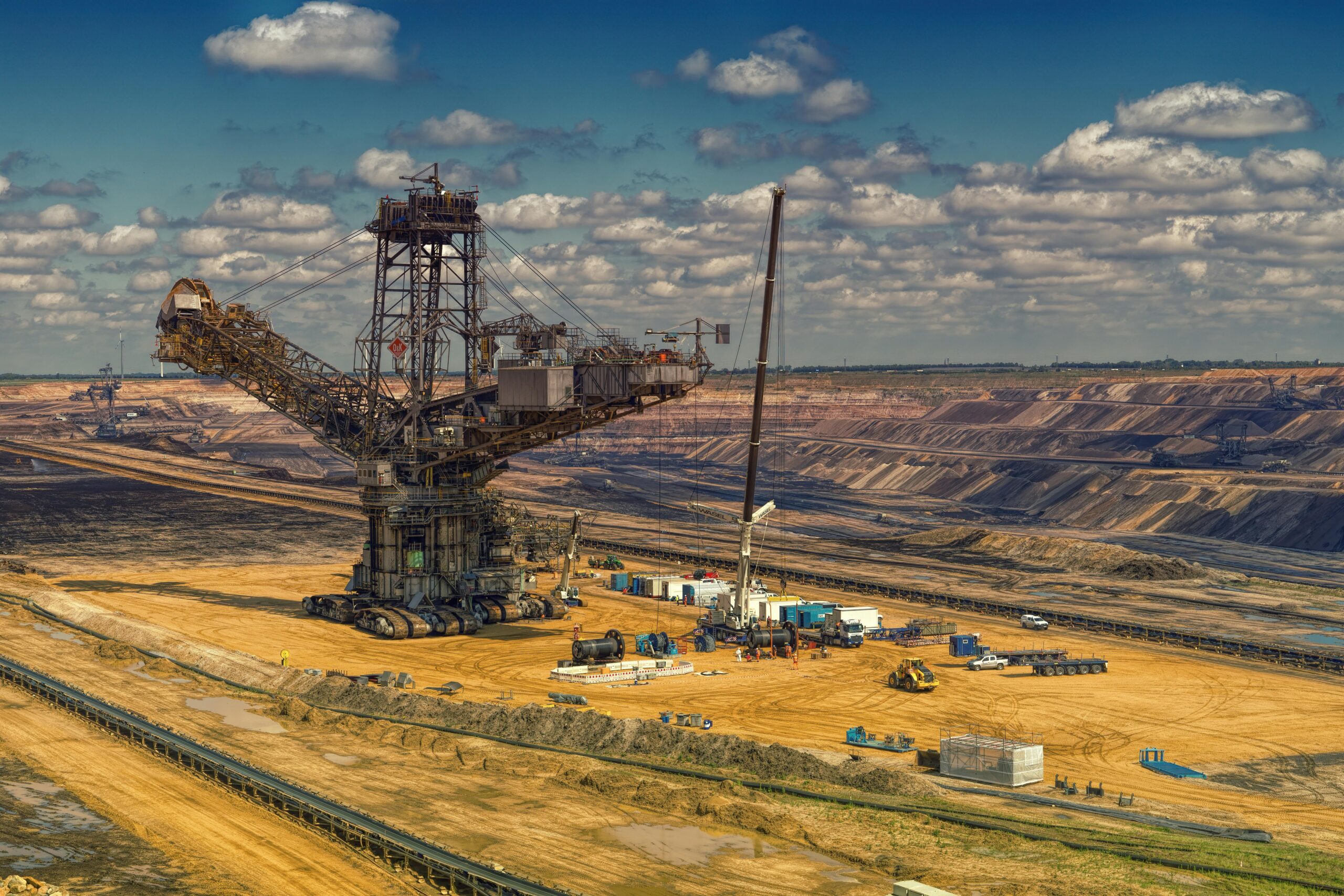
An exquisite ice-blue diamond has been unearthed at the famous Cullinan mine in SA.
ADVANTAGE - JANUARY COMMENTARY:
GLOBAL MARKETS
__________________
🌐 A Volatile but Constructive Start to 2026
January unfolded like the opening chapter of a global thriller, marked by shifting alliances, sharp market swings, and policy paths pulling in different directions. Yet, despite the noise, global markets managed to navigate the turbulence and finish the month on constructive footing.
The divergence in monetary policy became one of the defining themes of the month. In the United States, the Federal Reserve chose patience, keeping interest rates at 3.5–3.75% as a strong labour market and sticky services inflation kept the door open to future tightening. Across Europe and the UK, a different picture emerged: inflation continued to ease, but growth momentum remained fragile, prompting a cautious stance. In contrast, several emerging‑market central banks moved closer to easing cycles as inflation moderated more rapidly. This widening gap in rates reshaped capital flows and drove bouts of currency volatility.
Against this backdrop, emerging markets stepped forward as the relative winners. The global growth narrative increasingly pointed towards Asia, expected to generate over half of incremental global GDP growth in the coming year. While advanced economies such as the US, Europe, and the UK are projected to grow at around 1.8%, emerging markets are set to expand at a more robust 4.2%, supported by resilient domestic demand and structural investment momentum. China, while stable, continues to grow at a more modest pace, with targeted government support helping to hold activity steady without igniting a broader consumer surge. Combined with a weaker US dollar and rising commodity prices, these dynamics powered emerging markets and commodity‑linked assets to outperform their developed peers through January.
Layered onto these shifts was a dramatic surge in geopolitical tension that kept global investors on edge. The US military raid in Venezuela, which resulted in the country’s leadership being seized, sent shockwaves through the region. Almost simultaneously, President Trump reignited tensions with NATO allies, demanding tariffs unless Greenland was sold to the United States — a proposal that was dismissed outright but caused significant diplomatic unease. Soon after, US warships were repositioned from Venezuelan waters to the Persian Gulf, heightening fears of renewed confrontation with Iran and adding a fresh layer of geopolitical anxiety.
Financial markets responded swiftly. Safe‑haven assets surged, with gold briefly trading above US$5,000/oz before retracing. Oil prices spiked by roughly US$10/bbl as investors priced in heightened supply risks. Volatility increased, risk appetite dipped, and global risk premia widened, sometimes sharply.
Yet, despite the dramatic headlines, the underlying global growth trajectory remained intact. The geopolitical events acted more as volatility amplifiers than fundamental disruptors of the economic outlook. January ultimately demonstrated that although markets remain sensitive to sudden shocks, the broader narrative — one of uneven but resilient global growth — continues to hold.
Rand / US Dollar:
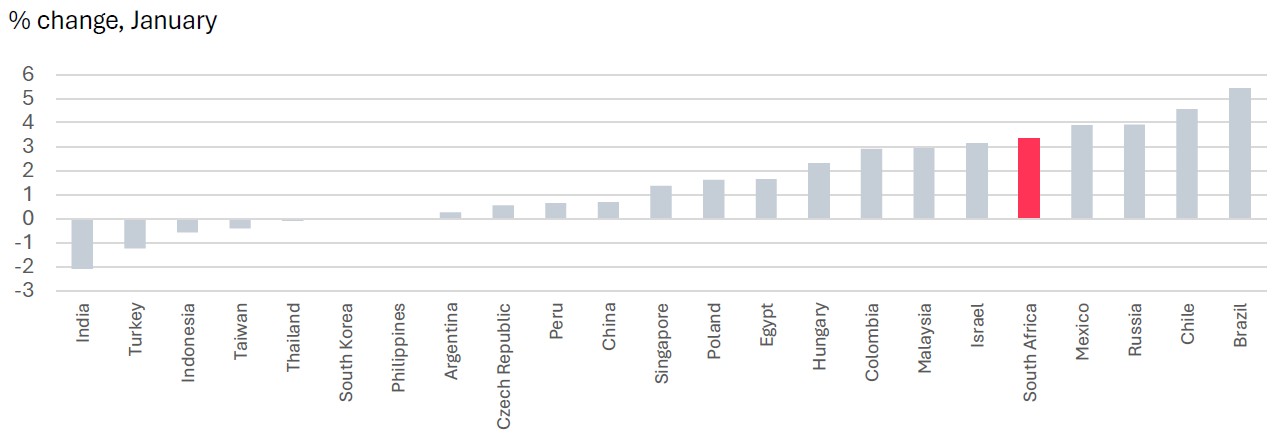
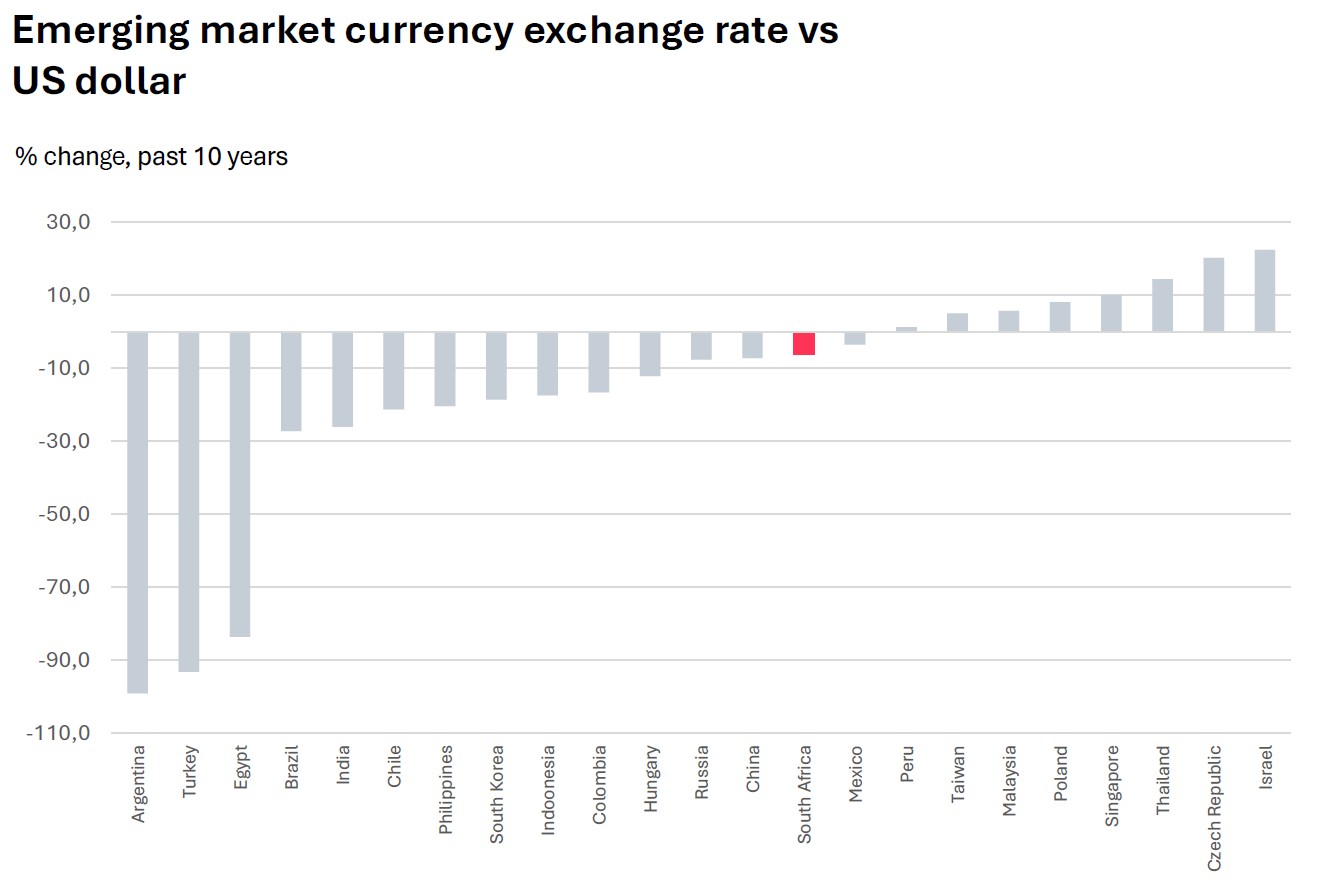
- In January, the rand gained 3.3% against the USD.
- This compares with the long-term monthly average appreciation of 3.9% and depreciation of -4.2%
Rand / Euro:
- In January, the rand gained 2.4 % against the EUR.
- This compares with the long-term monthly average appreciation of 2.8% and depreciation of -3.2%
Rand / British Pound:
- In January, the rand gained 1.3% against the GBP.
- This compares with the long-term monthly average appreciation of 3.1% and depreciation of -3.1%
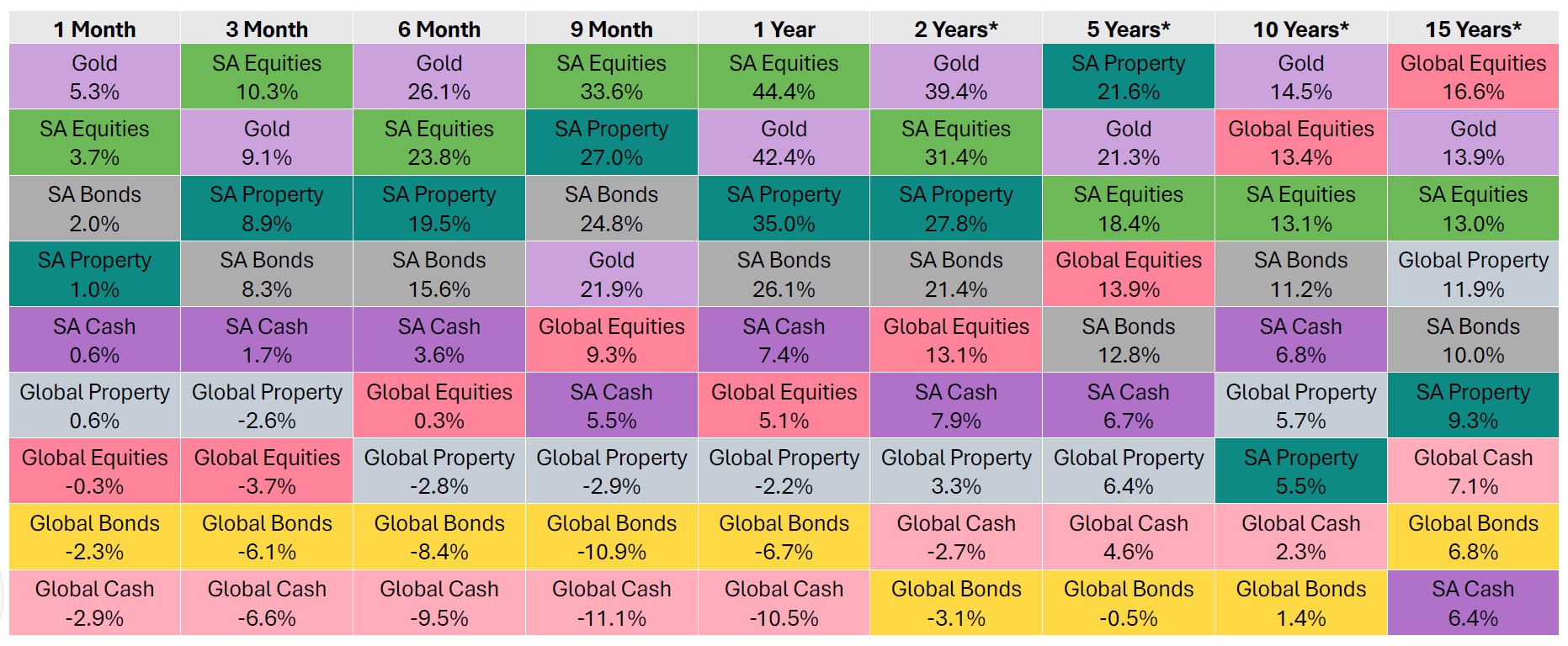
SMARTIE BOX IN RANDS:

LOCAL MARKETS
__________________
A Strong Month for South African Assets
South Africa continued to benefit from the global emerging‑market rally, supported by a weaker dollar, firmer commodity prices, and renewed foreign interest in high real‑yield assets.
The rand closed the month R16.03/$, aided by foreign demand for local bonds and money‑market instruments. While the currency appreciation was largely driven by global flows rather than domestic fundamentals, it helped contain imported inflation and boosted confidence in SA assets.
December CPI came in at 3.6% y/y, comfortably within the SARB’s revised 2–4% target band. Easing food and fuel inflation, combined with disciplined monetary policy, contributed to lowering inflation expectations toward 3%, reinforcing policy credibility. The SARB maintained a cautious but supportive stance, keeping rates unchanged and signalling that real rates remain sufficiently restrictive.
The standout feature was the SA bond market, which delivered its 13th consecutive positive month — the longest winning streak in over 26 years, supported by a firmer rand, improving fiscal sentiment, and a constructive global environment.
Incremental progress on structural reforms continued through Operation Vulindlela, with steps to:
- expand private electricity generation
- advance port & rail concessions
- accelerate infrastructure rollout (over R1 trillion committed over the medium term)
Multilateral funding has helped de‑risk key projects, improving investor sentiment around SA’s medium‑term growth potential. Implementation remains uneven, but momentum is trending positively.
2026 manager survey outlook
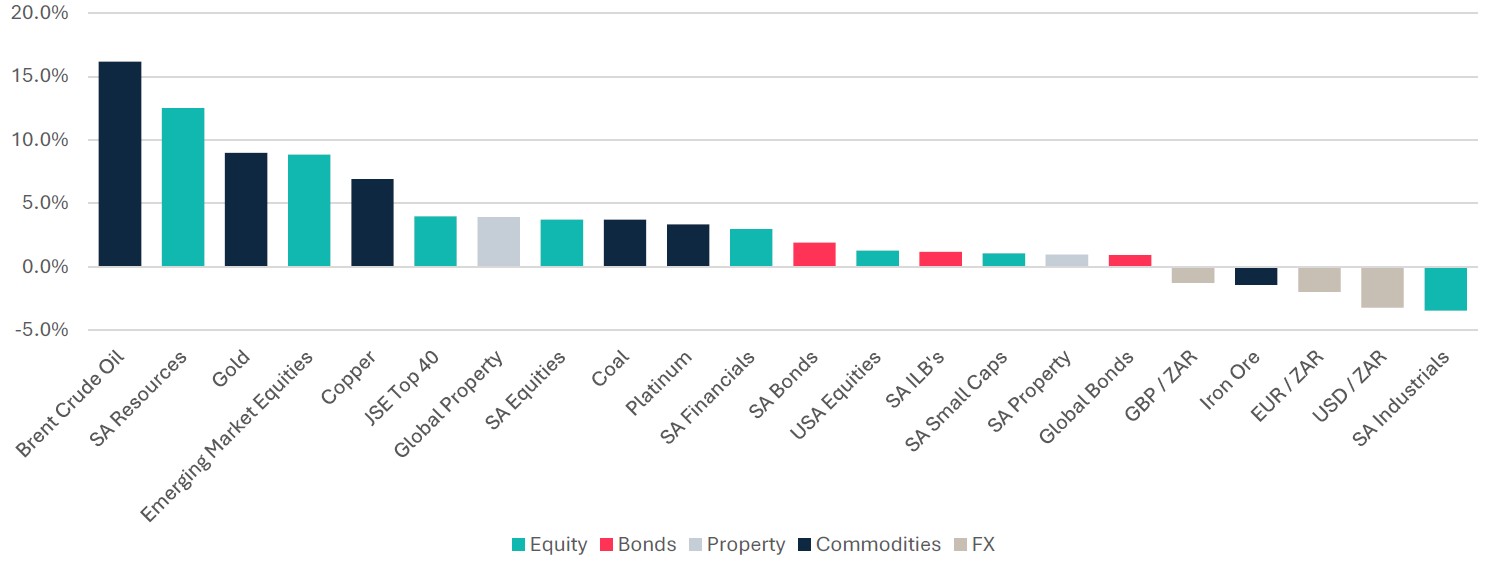
- The JSE All Share started the year on a high, notching 3.7% in the month.
- Resources (up 12.5%) rocketed higher, as Financials (up 3.0%) boasted a respectable performance. Industrials (down 3.4%) fell sharply, detracting substantially from the larger bourse.
- Small-caps (up 1.1%) inched upwards, as Mid-caps (up 6.3%) recorded a phenomenal month, with Large-caps (up 4.0%) not too far behind.
- SA Property markets gained modestly, as the ALPI added 1.0%, and the S&P SA REIT index gained 1.4%.
- SA Nominal Bonds (up 1.9%) grew nicely, and Inflation-Linked Bonds (up 1.2%) added good growth despite lower CPI targets in South Africa.
- Developed Market Equities has a strong January, as the MSCI World Index (up 3.0% in USD) climbed in a volatile environment. However they still lagged emerging market equities, as the MSCI Emerging Market Index (up 8.9% in USD) closed significantly higher.
- The Rand strengthened in January, in addition to dollar weakness the rand appreciated against most major currencies. Relative to the US Dollar (Rand appreciated 3.2%), the Euro (Rand appreciated 2.0%) and the Pound Sterling (Rand appreciated 1.3%).
- Gold added for the month (up 9.0%), despite it being a volatile month for the precious metal. Platinum continued to gain (up 3.4%) and Brent Crude (up 16.2%) on the back of geopolitical tensions between Iran and the US.
MONTHLY RETURNS: