INVESTMENT MARKET UPDATE
JULY 2026
What developments have unfolded in local and global markets throughout the month of JULY?
 1 – 0
1 – 0
WC Final Score as Spain beat Argentina
 5.0%
5.0%
South African CPI print for June
 +23.6%
One month change Brent spot price
CHROME - JULY COMMENTARY:
GLOBAL MARKETS
__________________
🌐 From AI euphoria to reality checks: markets navigate rising oil prices and valuation concerns
July was a mixed month for global markets as investors reassessed some of the themes that have driven market performance over the past year. While global equities finished the month marginally higher, headline returns masked significant volatility beneath the surface as concerns around artificial intelligence valuations, geopolitical tensions and persistent inflation influenced investor sentiment.
One of the most notable developments was a sharp rotation away from technology and semiconductor shares. While artificial intelligence remains one of the most important long-term investment themes, investors became increasingly focused on whether the substantial capital being invested in AI infrastructure is translating into sustainable revenue and earnings growth. This led to profit-taking across parts of the technology sector and caused technology-heavy indices such as the Nasdaq to underperform broader markets.
Geopolitical developments also played a significant role during the month. Renewed conflict involving Iran, Israel and the United States disrupted shipping activity through the Strait of Hormuz, pushing oil prices sharply higher and reigniting concerns about inflation. Brent crude oil briefly traded above US$100 per barrel before retreating later in the month as supply concerns eased. The volatility in energy markets created uncertainty across equity, bond and currency markets globally.
Central banks remained cautious as inflation pressures persisted. Higher energy prices and resilient economic conditions reduced expectations for near-term interest rate cuts, reinforcing the likelihood of a “higher for longer” interest rate environment. Bond yields moved higher as investors adjusted their expectations for future monetary policy.
Despite these challenges, corporate earnings generally remained resilient, particularly among technology and infrastructure businesses linked to ongoing digital transformation trends. July highlighted that while market leadership may be broadening beyond a narrow group of technology companies, innovation, economic resilience and corporate profitability continue to support the long-term outlook for investors.
Rand / US Dollar:
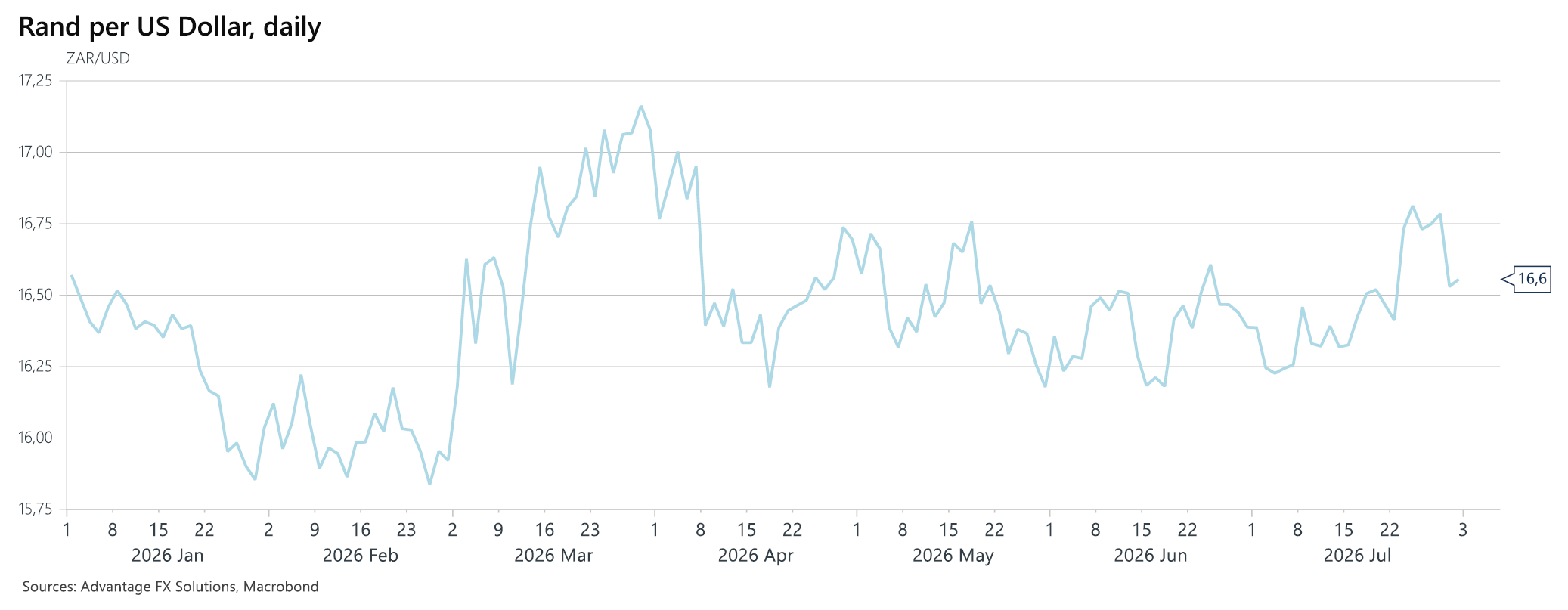
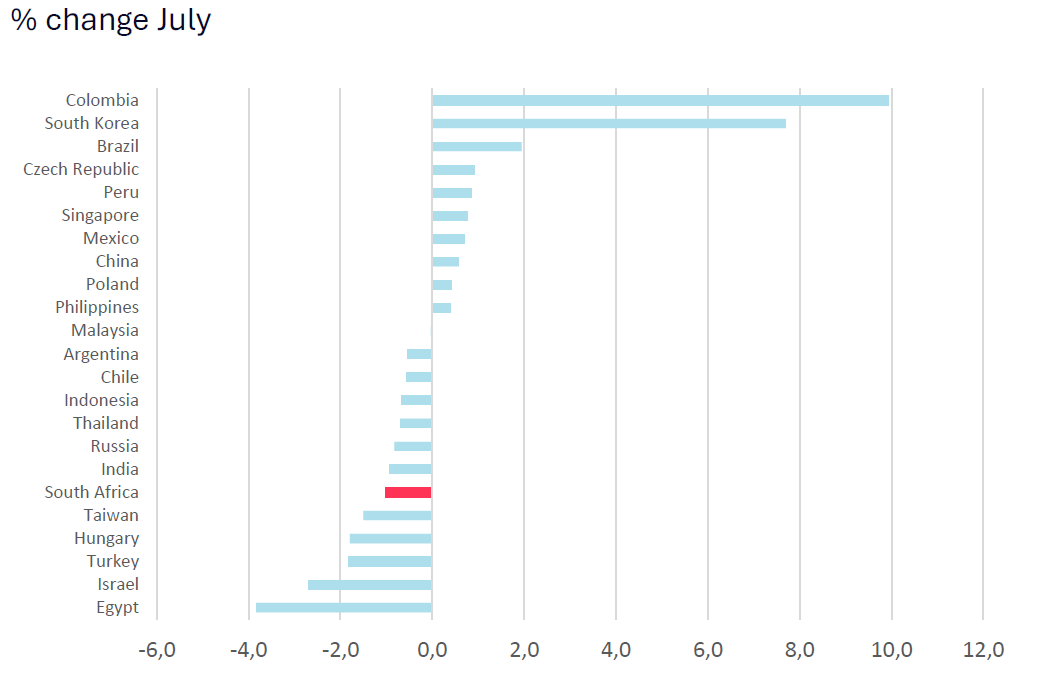
- In July, the rand has lost 1.0% against the USD. In June the Rand lost 1.3% against the USD.
- The average monthly rand appreciation over the past 12 months against the USD has been 0.7% as at end July.
Rand / Euro:
- In July, the rand has lost 2.0% against the EUR. In June, the rand gained 0.7% against the EUR.
- The average monthly rand appreciation over the past 12 months against the EUR has been 0.9% as at end June.
Rand / British Pound:
- In July, the rand has lost 2.4% against the GBP. In May, the rand gained 3.9% against the GBP.
- The average monthly rand appreciation over the past 12 months against the GBP has been 1.0% as at end June.
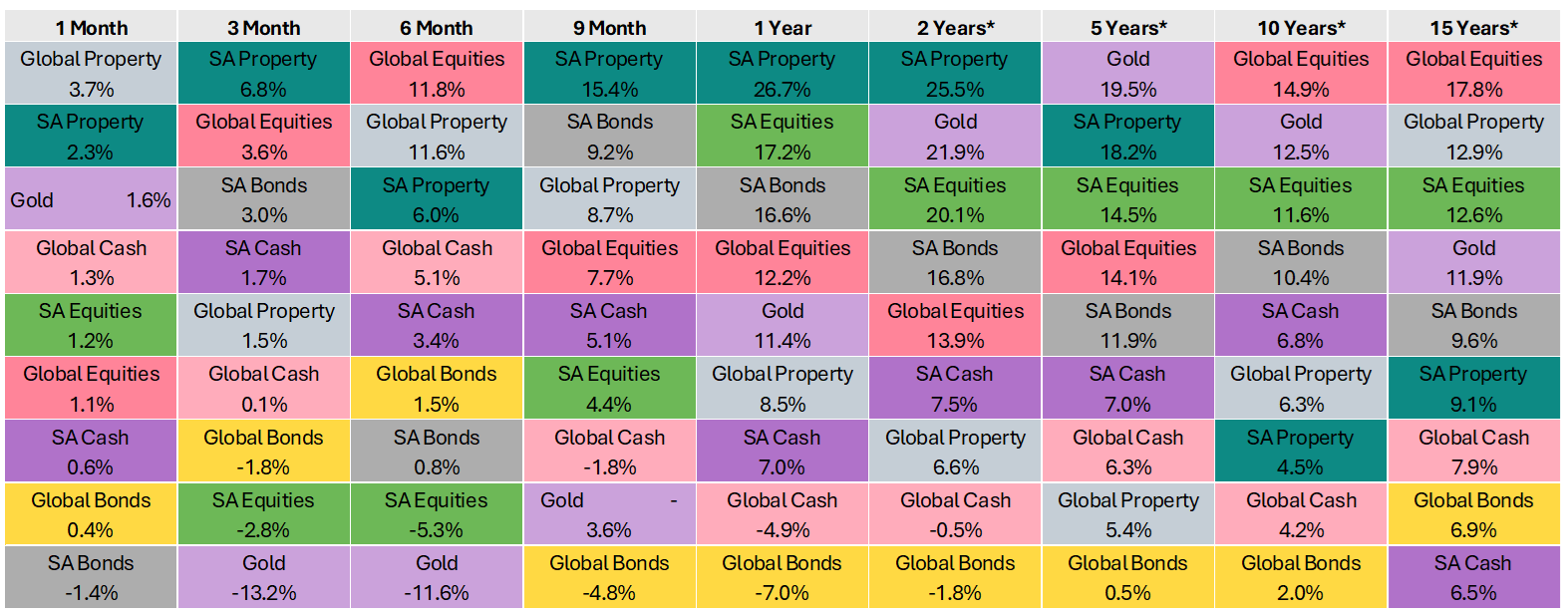
SMARTIE BOX IN RANDS:

LOCAL MARKETS
__________________
South Africa: resilient markets despite rising inflation and rate uncertainty
South African markets demonstrated resilience during July despite rising inflation, a weaker rand and growing uncertainty around the domestic interest rate outlook.
Headline inflation accelerated to 5.0% year-on-year, its highest level in two years, largely driven by higher fuel and transport costs following the earlier surge in global oil prices. Rising electricity costs and broader inflationary pressures also contributed to the increase, prompting concerns that inflation could remain elevated for longer than previously expected.
Against this backdrop, the South African Reserve Bank elected to leave interest rates unchanged. While the decision provided some support to economic growth, the split vote highlighted the difficult balance between supporting a fragile economy and maintaining price stability in an environment of rising inflation and global uncertainty.
Despite these challenges, local equity markets performed well. The JSE All Share Index ended the month higher as all three major sectors contributed positively. Resource shares benefited from stronger gold, platinum group metal and oil prices, while Financials were supported by a weaker rand and expectations that interest rates may remain elevated. Listed property continued its strong recovery and was one of the better-performing local asset classes during the month.
The bond market was less favourable, with rising global bond yields and inflation concerns placing pressure on local fixed income returns. Meanwhile, the rand weakened against major currencies as higher oil prices, global risk aversion and shifting global interest rate expectations weighed on investor sentiment.
While economic growth remains subdued, there are still encouraging signs beneath the surface. South Africa’s fiscal and trade balances remain relatively supportive, and ongoing infrastructure and logistics reforms continue to provide reasons for cautious optimism. July demonstrated that despite ongoing economic challenges, South African markets remain capable of delivering positive returns when supported by resilient corporate earnings, attractive valuations and improving structural fundamentals.
Is Cheaper Always Better in retirement?
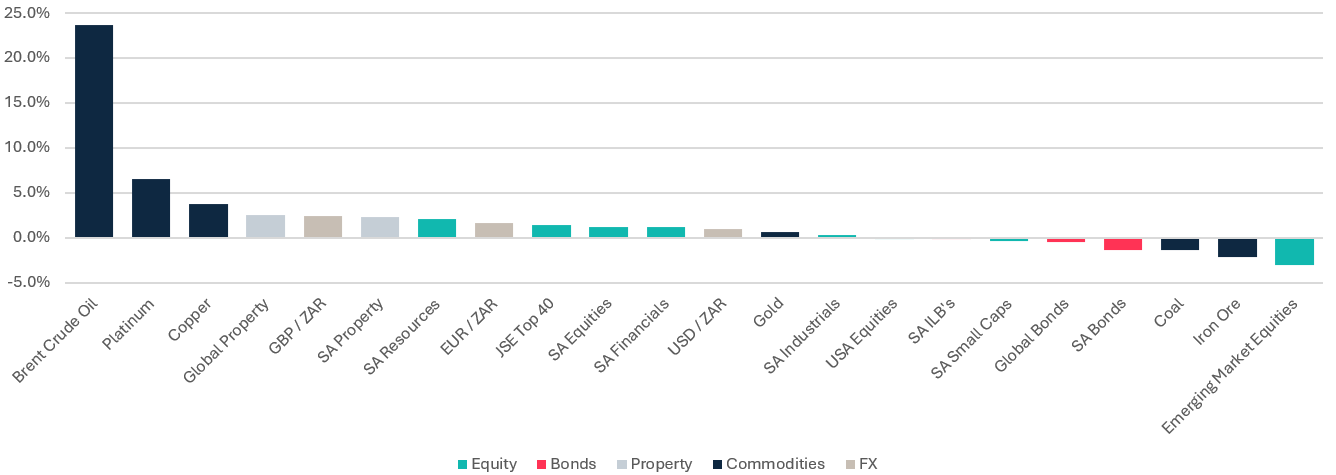
- The JSE All Share gained ground in a volatile month, raising 1.2%.
- All three major sectors contributed to the broader bourse, as Resources (up 2.1%) bounced up, Financials (up 1.2%) continued to add value, and Industrials (up 0.3%) inched higher.
- Small-caps (down 0.4%) ended the month marginally lower, while Mid-caps (up 1.4%) and Large-caps (up 1.4%) jumped into the green.
- SA Property continued to perform well as the ALPI climbed 2.3% and S&P SA REIT Index advanced 1.6%.
- SA Nominal Bonds (down 1.4%) fell sharply, as the market expressed concern over future rate cuts. Inflation-Linked Bonds (down 0.1%) ended marginally lower, as inflation expectations rose.
- Emerging Market Equities suffered a sharp sell-off in the semiconductor sector, which had an adverse effect on the highly concentrated index. The MSCI Emerging Market Index dropped (down 3.0%). Developed markets fared better, as the MSCI World Index closed the month (up 0.5%).
- The Rand fell against major currencies, as a largely expected rate increase did not come to pass. The rand fell against the US Dollar (Rand depreciated 1.0%), the Euro (Rand depreciated 1.6%) and the Pound (Rand depreciated 2.4%).
- Resources ended north of zero, as prices soared in the face of geopolitical tensions in the middle east. Gold (up 0.7%) squeaked higher, Platinum (up 6.5%) jumped up, and Brent Crude (up 23.6%) rocketed into positive territory.
MONTHLY RETURNS: