INVESTMENT MARKET UPDATE
JUNE 2025
What developments have unfolded in local and global markets throughout the month of JUNE?
 6200
6200
S&P 500 closed the month at record highs
 1973
1973
US Dollar experienced its worst first half in more than 50 years
 75% Higher
Cost of electricity in SA by 2028 after RTP fully effective
GLOBAL MARKET
_______________________
Markets Resilient Amid Geopolitical Shocks and Economic Uncertainty
ANALYTICS - COMMENTARY FOR JUNE:
SMARTIE BOX IN RANDS:
LOCAL MARKETS
__________________________
South African Markets Steady Amid Political Tensions and Policy Shifts
South African markets delivered a solid performance in June, though local equities lagged broader emerging market peers. The resources sector led the charge, buoyed by a record surge in platinum prices, while gold prices remained stable. Tech-heavyweights Naspers and Prosus also rallied, supported by strong performance from Tencent and improving sentiment in China.
On the fixed income front, South African bonds continued to post positive returns, underpinned by growing expectations that the South African Reserve Bank (SARB) may lower its inflation target. SARB Governor Lesetja Kganyago reiterated his long-standing support for a lower target in the central bank’s annual report, reinforcing investor sentiment that a formal adjustment could be announced before year-end. Such a move would align South Africa more closely with its emerging market peers and could bolster confidence in the country’s monetary policy framework.
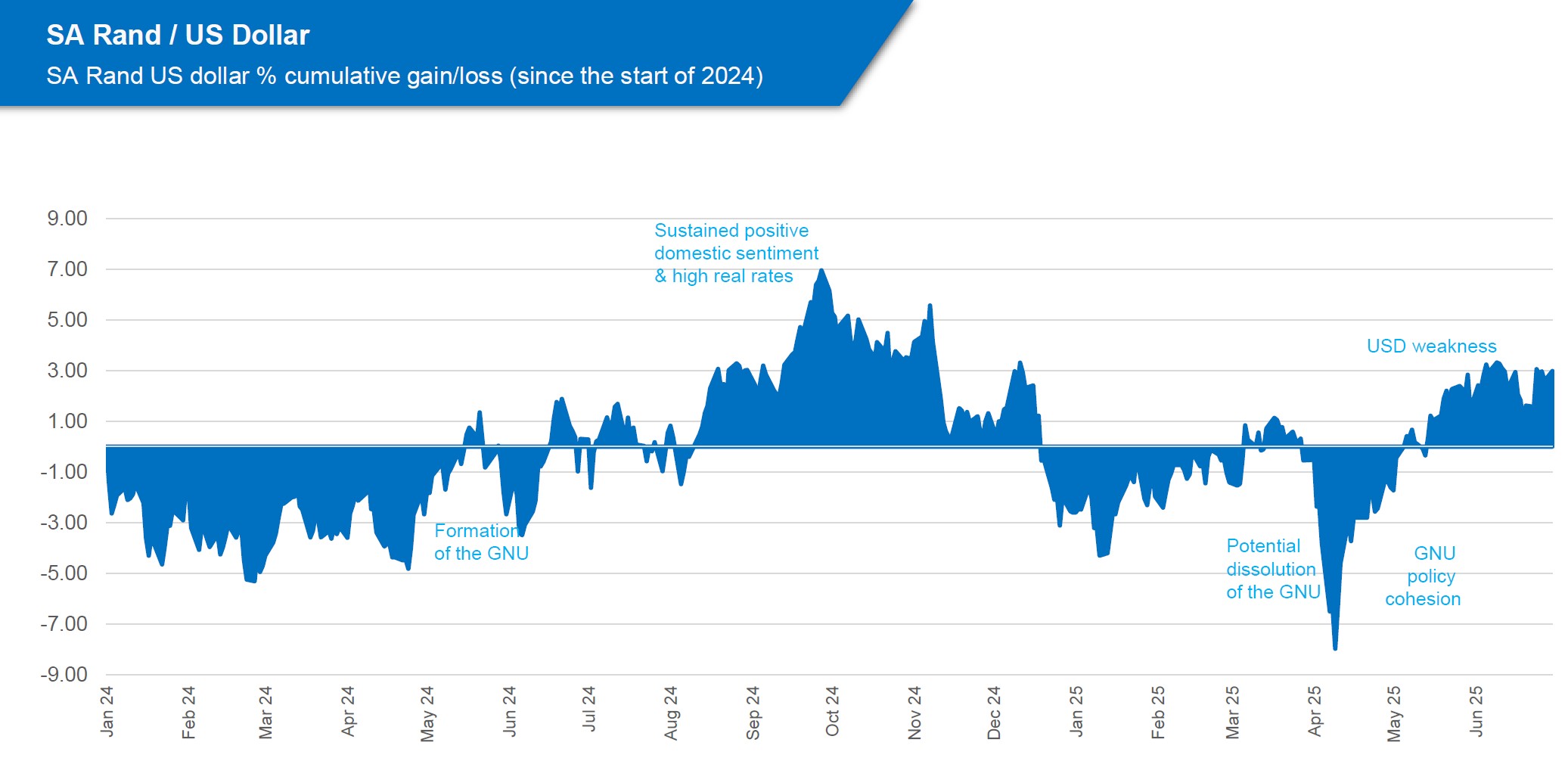
Political developments, however, introduced a layer of uncertainty. President Cyril Ramaphosa’s dismissal of DA Deputy Minister Ian Whitfield sparked concerns over the stability of the Government of National Unity (GNU). While fears of a DA withdrawal from the coalition rattled markets briefly, the party ultimately chose to remain. Nevertheless, it used the moment to criticize the president’s selective accountability—highlighting inaction against ministers implicated in corruption while swiftly removing an opposition figure over a relatively minor issue. The DA has since withdrawn from the president’s National Dialogue and vowed not to support budget votes for ministers facing misconduct allegations.
In a more positive development, South Africa is nearing its exit from the FATF greylist. The country has completed all 22 action items in its reform plan, including enhanced investigations and prosecutions aimed at combating financial crime. An on-site assessment is expected before October 2025 to verify the effectiveness of these reforms. According to National Treasury, this progress should support the rand and bond markets in the months ahead by improving investor confidence and reducing risk premiums.
Despite political noise and global headwinds, South African markets have shown resilience. With potential monetary policy shifts, improving regulatory credibility, and a stabilizing global backdrop, the outlook for local assets remains cautiously optimistic.
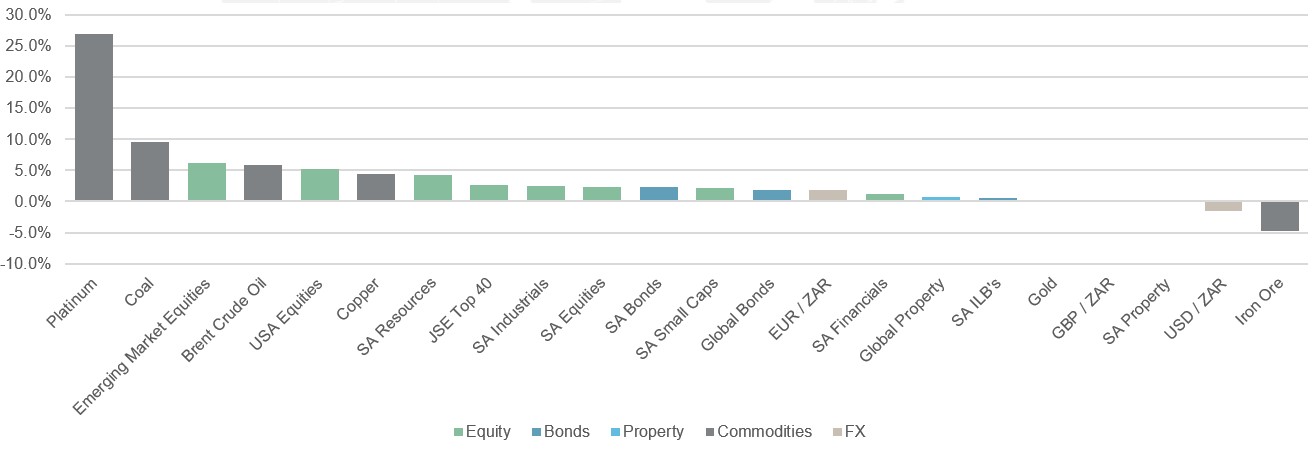
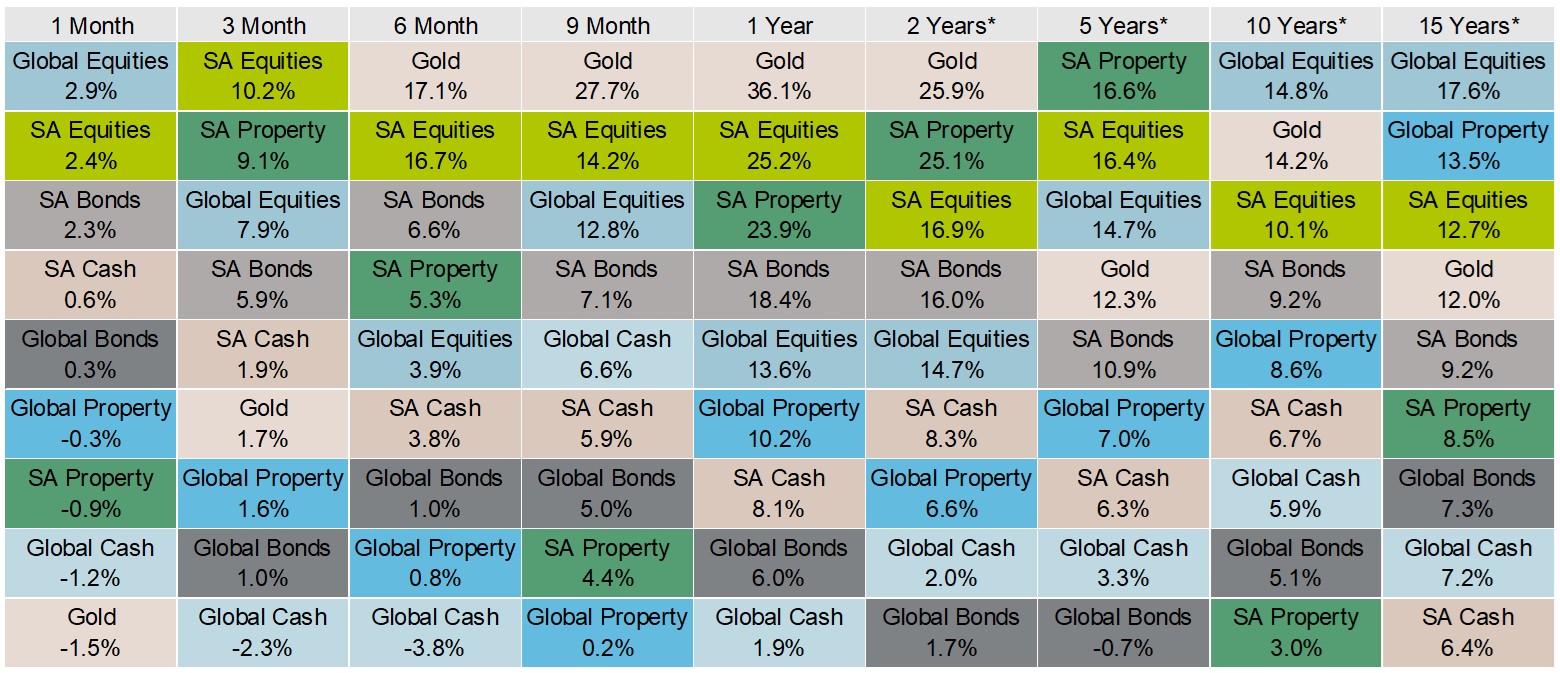
- The JSE All Share gained ground over the month, up 2.4%.
- All three major sectors supported the bourse, as Industrials (up 2.5%) jumped up, Financials (up 1.2%) ticked higher, and Resources (up 4.2%) flew into the green.
- Small-caps (up 2.1%) boasted a modest gain, slightly outperforming Mid-caps (up 2.0%) while Large-caps (up 2.6%) outperformed them both.
- SA Property markets lagged in June, as the ALPI dropped 0.9%, while the S&P SA REIT index lost 1.7%.
- SA Nominal Bonds (up 2.3%) boasted strong returns, while Inflation-Linked Bonds remained muted, up 0.5%.
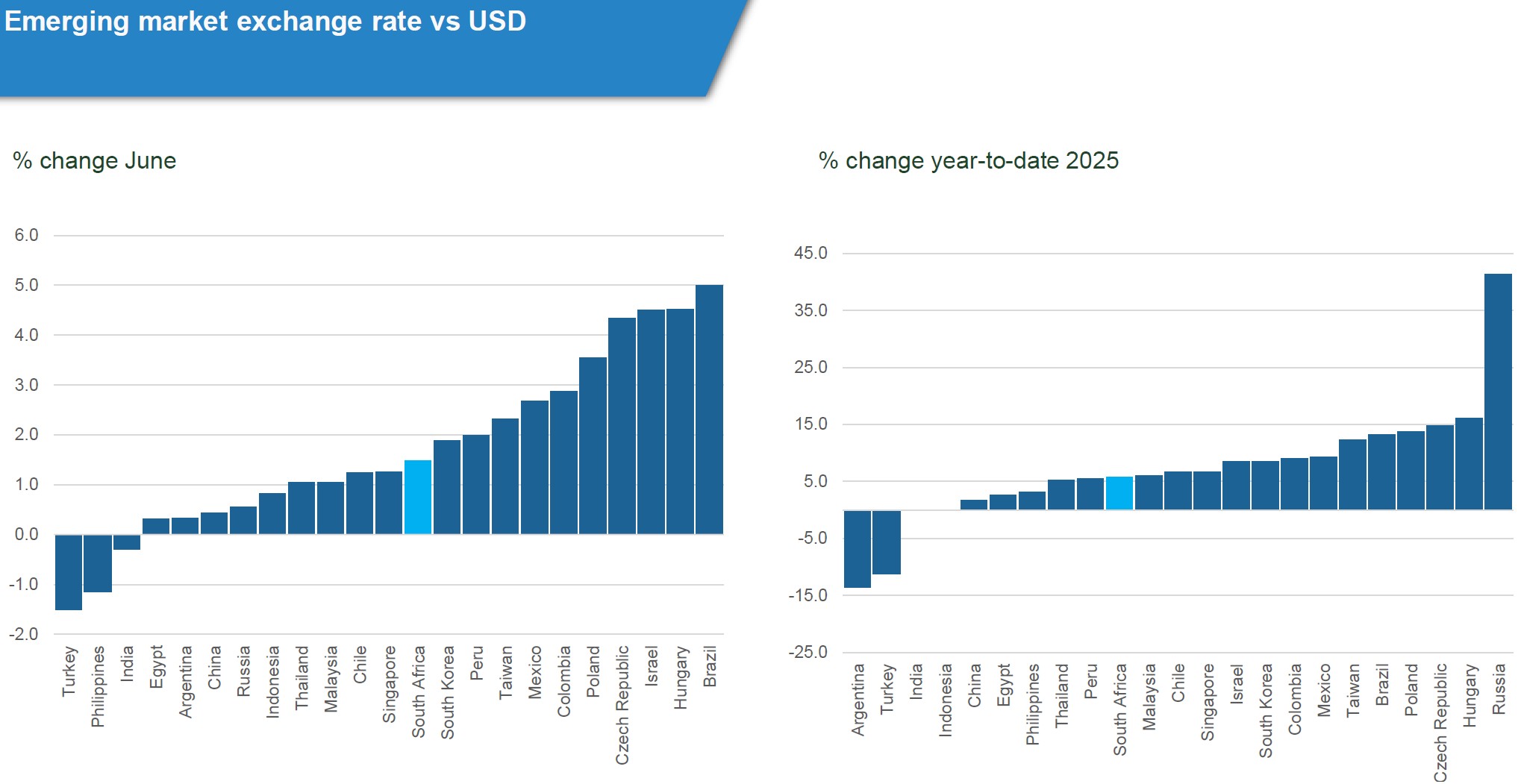
- Developed Market Equities closed higher in US dollar terms, as the S&P closed at record highs to end the month. However, the Emerging Markets composite stole the show with incredible outperformance. The MSCI World Index rose 4.3% and the MSCI Emerging Market Index soared 6.1% higher.
- Relative to the US Dollar (Rand appreciated 1.6%), the Euro (Rand depreciated 1.8%) and the Pound Sterling (Rand depreciated 0.0%).
- Gold (up 0.2%) inched its way into the green, while Platinum (up 26.8%) rocketed higher, and Brent Crude gained 5.8% over the month.
Inflation, tax and your fixed deposit
MONTHLY RETURNS: