INVESTMENT MARKET UPDATE
MAY 2025
What developments have unfolded in local and global markets throughout the month of MAY?

 Aa1
Aa1
Latest US sovereign credit rating by Moody’s
 7.25%
7.25%
Current level of the SARB Repo rate
 $36 Trillion
Current level of US national debt
GLOBAL MARKET
_______________________
Markets in May: A Balancing Act Between Growth, Inflation, and Trade Tensions
ANALYTICS - COMMENTARY FOR MAY:
SMARTIE BOX IN RANDS:
LOCAL MARKETS
__________________________
South Africa in May: A Delicate Dance of Optimism and Challenge
South Africa’s financial landscape in May 2025 reflected a cautious but growing sense of optimism, as policymakers and markets responded to both domestic reforms and shifting global dynamics.
The South African Reserve Bank (SARB) delivered a widely anticipated 25 basis point rate cut, bringing the repo rate down to 7.25%. The move was aimed at supporting economic activity amid easing inflationary pressures, thanks to lower oil prices, a firmer rand, and reduced uncertainty both locally and abroad. While the Monetary Policy Committee floated the possibility of achieving a 3.0% inflation target, it emphasized that such a scenario would require strict fiscal discipline, moderated wage growth, and better price alignment.
On the political front, President Cyril Ramaphosa made headlines with a high-stakes visit to Washington, seeking to reset relations with the Trump administration. Backed by DA leader John Steenhuisen, Ramaphosa pushed back against recent criticisms and described his meeting with President Trump as “robust but fruitful.” The renewed dialogue focused on trade, investment, and South Africa’s role in the African Growth and Opportunity Act (AGOA), signaling a potential thaw in bilateral tensions.
However, the domestic labor market continued to struggle. Unemployment rose to 32.9% in Q1 2025, up from 31.9% the previous quarter, with youth unemployment remaining alarmingly high. Despite ongoing reforms, structural barriers—such as skills mismatches and rigid labor policies—continue to stifle job creation and broader economic recovery.
Yet, South African financial markets offered a silver lining. Equities outperformed their emerging market peers for the fifth consecutive month in rand terms, with all major sectors posting strong returns. Local bonds also defied global trends, delivering gains as investor confidence grew following the successful passage of the long-awaited Budget 3.0. Market sentiment was further buoyed by expectations—ultimately realized—of SARB’s rate cut, which provided a measure of relief to consumers and businesses alike.
As South Africa moves into the second half of the year, the balance between reform momentum and persistent structural challenges will be key to sustaining investor confidence and economic resilience.
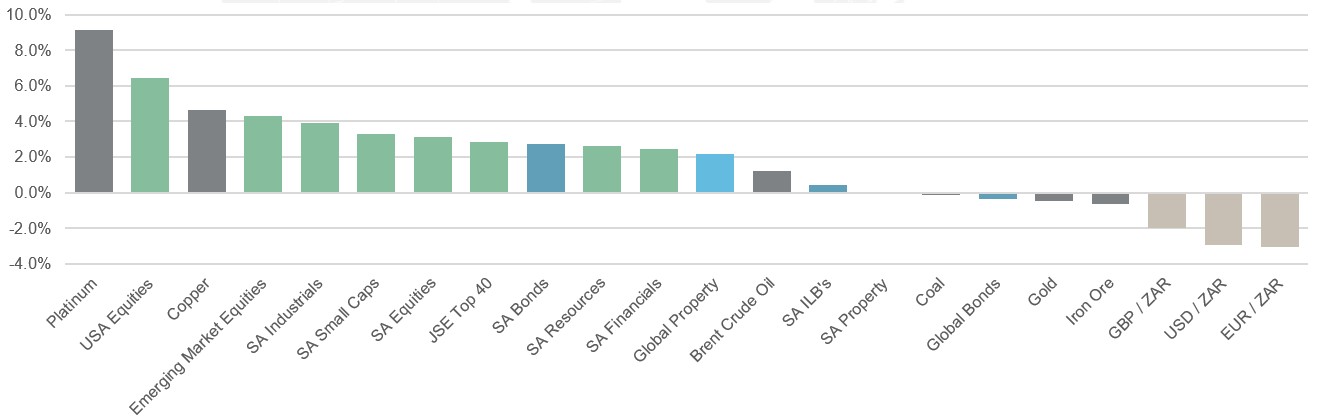
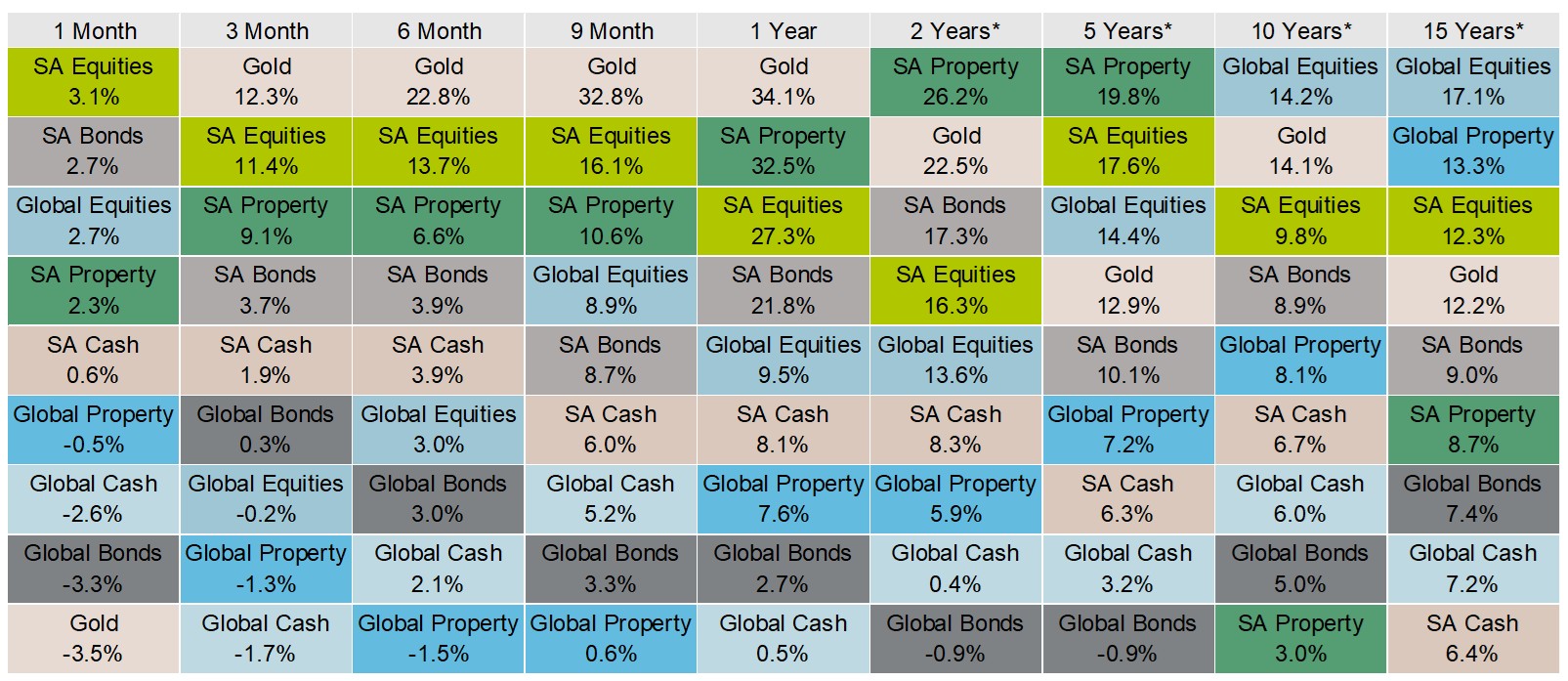
- The JSE All Share traded higher in May, up 3.1%.
- Industrials (up 3.9%) gained sharply in May, Financials (up 2.5%) and Resources (up 2.6%) also trended higher.
- Small-caps (up 3.3%), Mid-caps (up 5.5%) and Large-caps (up 2.9%) delivered strong gains across the board.
- SA Property markets were also positive in May, with the ALPI gaining 2.3%, while the S&P SA REIT index rose 4.6% over the month.
- SA Nominal Bonds (up 2.7%) delivered some strong returns as a consequence of improving sentiment surrounding the GNU, while Inflation-Linked Bonds were slightly positive, up 0.4%.
- Emerging Market Equities underperformed the Developed Market Equities in US Dollar terms in May. The MSCI World Index rose 6.0% and the MSCI Emerging Market Index rose 4.3%.
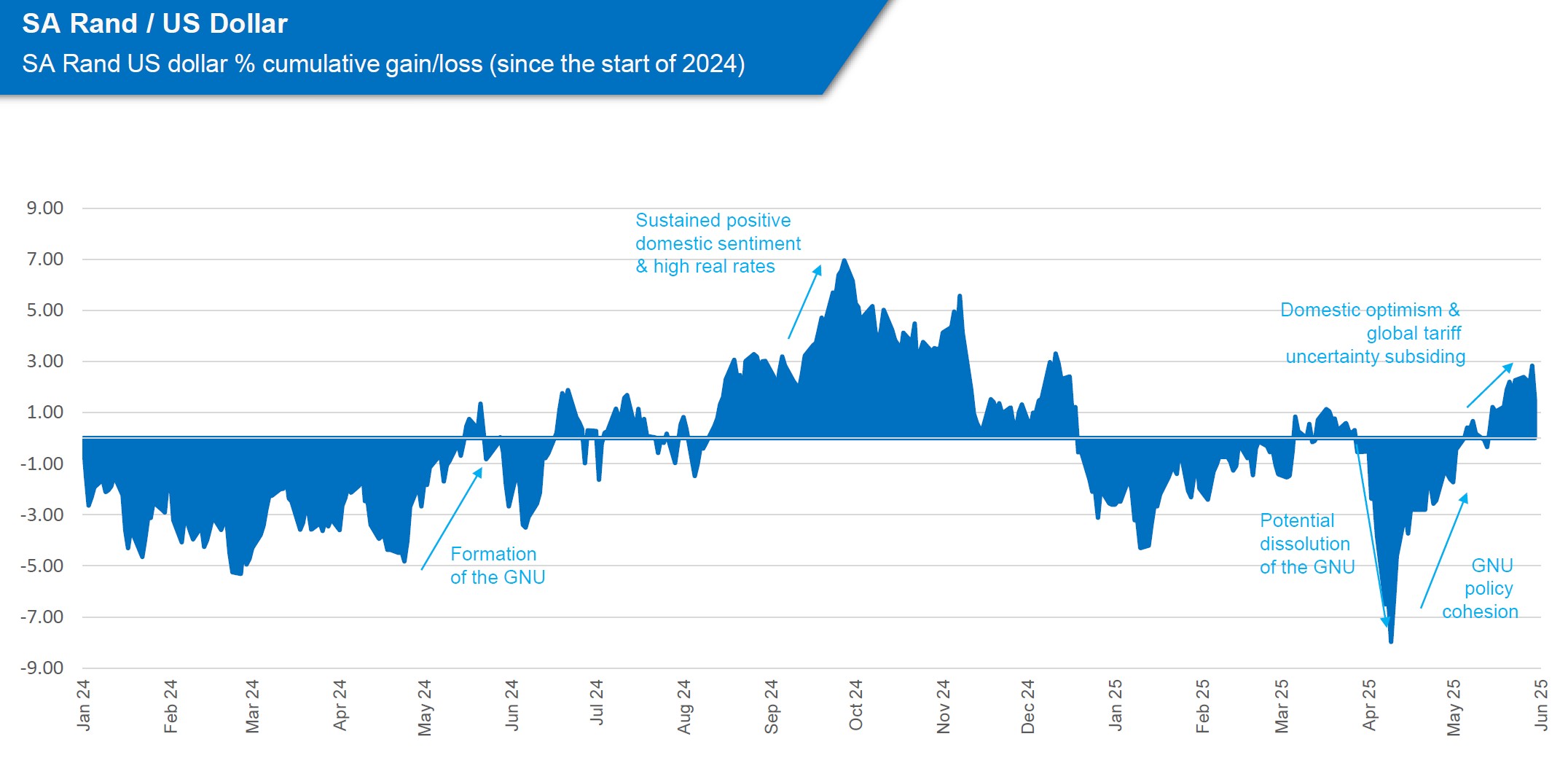
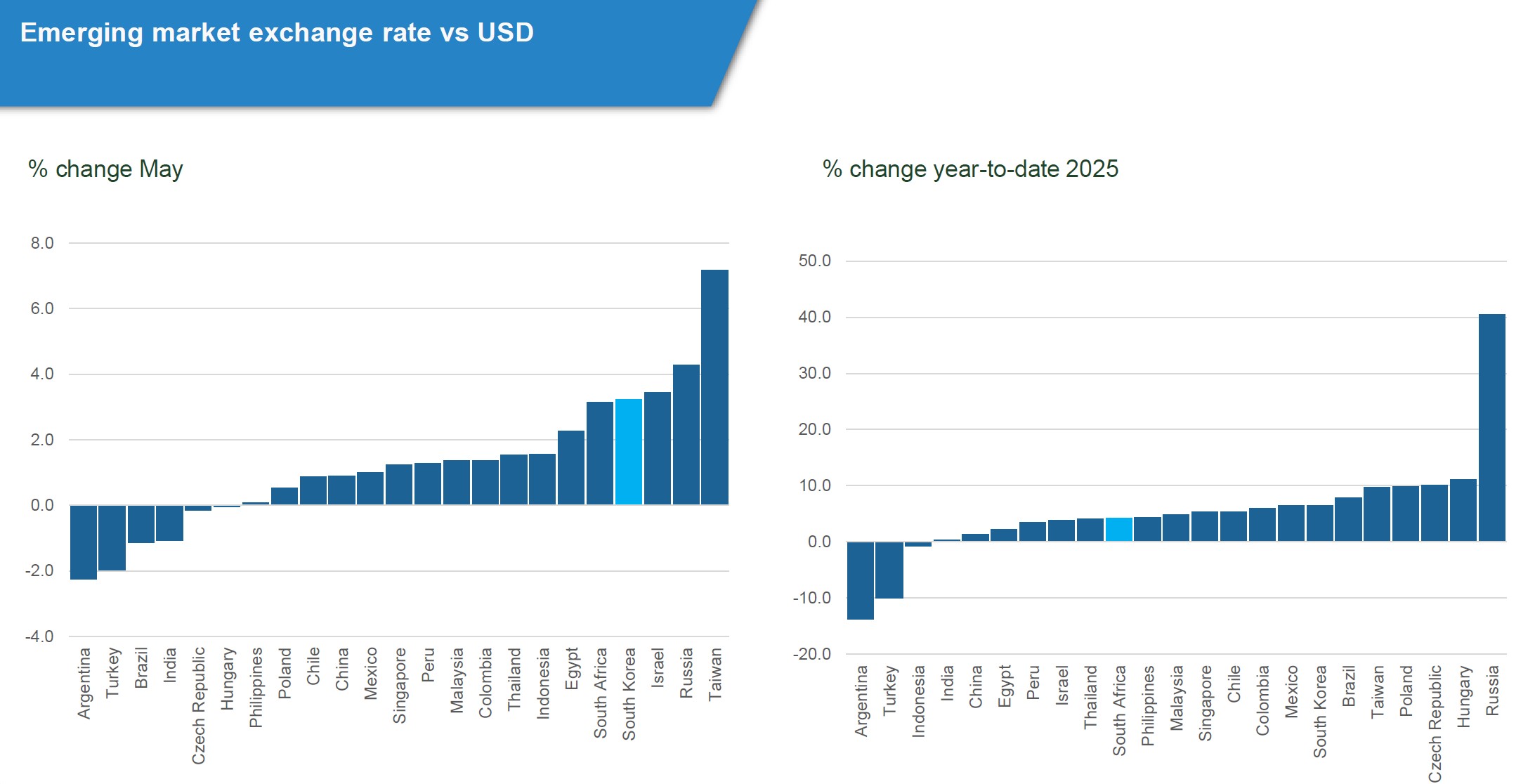
- Relative to the US Dollar (Rand appreciated 2.9%), the Euro (Rand appreciated 3.1%) and the Pound Sterling (Rand appreciated 2.0%).
- Gold prices showed slowing momentum and slightly contracted 0.5% in May, while Platinum rose sharply by 9.1%. Brent Crude experienced a small gain of 1.2% over the month.
Inflation, tax and your fixed deposit
MONTHLY RETURNS: